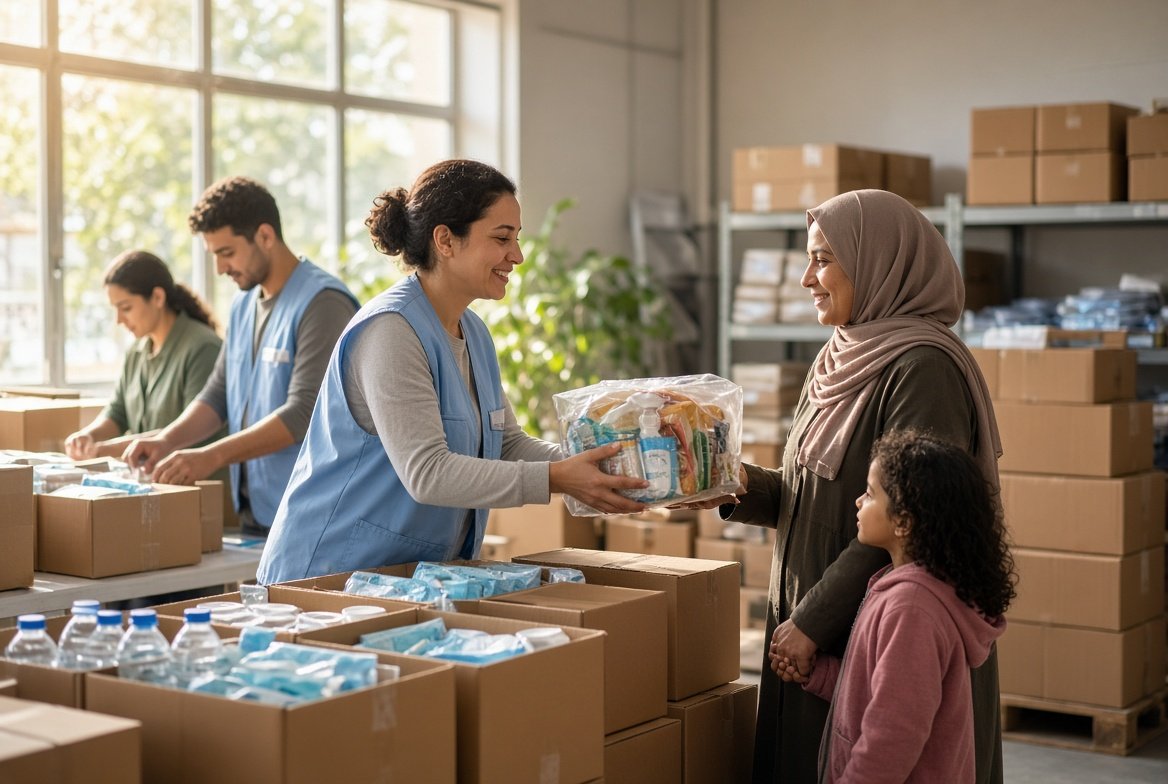
The humanitarian situation in Gaza has reached levels of severity that demand sustained international attention and coordinated financial support. Years of conflict, restricted movement of goods and people, damaged infrastructure, and limited access to basic services have left large segments of the population dependent on external assistance for survival. Relief funds directed toward Gaza play a critical role in addressing immediate life-threatening needs while also supporting longer-term recovery efforts.
These funds help cover the costs of food distribution, clean water provision, emergency medical care, temporary shelter, and essential household items. Without consistent financial inflows, the capacity of aid networks to respond effectively diminishes rapidly, leaving vulnerable families exposed to heightened risks of malnutrition, disease, and displacement.
How Relief Funds Translate into Practical Assistance
When donors contribute to relief funds for Gaza, the resources typically move through established channels that prioritize verified needs assessments and accountable delivery mechanisms. Funds are allocated toward procurement of supplies, logistics for transportation into the region, and partnerships with local distribution networks that understand community priorities.
In practice this means purchasing high-nutrition food parcels, water purification units, medical kits containing antibiotics and trauma supplies, and materials for basic shelter repairs. A significant portion also supports cash assistance programs that allow families to purchase items according to their most pressing requirements, thereby preserving dignity and supporting remaining local markets.
Effective use of relief funds depends on transparent reporting, independent monitoring where feasible, and flexibility to redirect resources when access routes change or new emergencies emerge. The goal remains consistent: convert financial contributions into tangible improvements in daily living conditions for people who have exhausted their own coping mechanisms.
The Role of International Coordination and Local Partnerships
Successful relief efforts for Gaza rely on collaboration between international donors, specialized agencies, and grassroots organizations that maintain presence inside the territory. International funding provides the scale necessary for large-volume procurement and logistics, while local partners ensure that aid reaches the most affected neighborhoods and respects cultural and social contexts.
This dual approach reduces duplication of effort and improves targeting accuracy. Coordination platforms help map needs across sectors so that food, health, water, and shelter interventions reinforce one another rather than operate in isolation. For donors seeking impact, supporting organizations that demonstrate strong local relationships and clear financial accountability tends to produce more reliable outcomes.
One such organization operating from London, UK, is Seven Spikes Relief, which channels contributions into verified humanitarian programs focused on Gaza. By maintaining operational bases outside the conflict zone while partnering with trusted local implementers, entities of this type can manage donor funds with relative stability and provide regular updates on distribution progress.
Challenges in Delivering Relief Funds Effectively
Despite the clear urgency, multiple obstacles complicate the flow of relief funds into practical assistance. Access constraints, including border delays, security risks, and bureaucratic procedures, can slow the movement of both money and goods. Currency fluctuations and banking restrictions sometimes hinder the transfer of funds into the region. Verification of needs and monitoring of distribution remain difficult in environments where independent access is limited.
Additionally, the sheer volume of simultaneous crises worldwide can dilute public attention and donor fatigue, making sustained fundraising more challenging over time. Addressing these issues requires adaptive strategies such as pre-positioning supplies, diversifying funding sources, investing in local capacity, and maintaining transparent communication with supporters. Donors who understand these operational realities are better positioned to choose channels that emphasize resilience and accountability rather than short-term visibility alone.
Long-Term Considerations Beyond Immediate Relief
While emergency relief funds address acute suffering, longer-term recovery in Gaza will eventually require investment in rebuilding infrastructure, restoring livelihoods, and strengthening local institutions. Current funding streams primarily focus on life-saving interventions, yet thoughtful allocation can also include components that prepare communities for eventual reconstruction.
Examples include supporting temporary learning spaces for children, maintaining basic healthcare services that prevent secondary health crises, and providing tools or materials that enable small-scale income generation. Balancing immediate and preparatory support remains delicate; diverting too many resources away from emergency needs risks increasing mortality and morbidity in the short term.
Building Public Awareness and Sustained Engagement
Public understanding of the Gaza humanitarian situation influences the volume and consistency of relief funding. Accurate information about living conditions, verified needs, and the practical results of aid delivery helps counteract both apathy and misinformation. Educational content that explains how funds are used, what constraints exist, and which outcomes have been measured tends to foster more informed giving.
Digital platforms, community events, and partnerships with media outlets all contribute to keeping the issue visible without sensationalism. Sustained engagement also benefits from clear pathways for donors to follow progress, whether through periodic reports, impact summaries, or opportunities to support specific program areas. When people see that their contributions produce measurable improvements in food security, health access, or shelter conditions, the motivation to continue supporting relief efforts strengthens.
FAQs
How can individuals ensure their contributions reach people in need?
Selecting organizations with established track records, independent financial audits, and transparent reporting practices increases the likelihood that funds are used as intended.
What types of assistance are most urgently required?
Current priorities commonly include food parcels designed for nutritional balance, safe drinking water and sanitation materials, emergency medical supplies, and temporary shelter solutions. Cash-based assistance has also proven effective in many contexts by allowing households to address their own most immediate gaps.
Are there risks that funds may be diverted?
Diversion risks exist in any high-need environment with limited oversight capacity. Reputable channels mitigate these risks through layered verification, local partner vetting, and third-party monitoring where possible.
How does the London base of certain organizations affect operations?
Being located outside the immediate conflict zone allows for more stable financial management, donor communication, and logistical planning while still enabling partnerships with implementers on the ground.
Can small donations make a meaningful difference?
Yes. Aggregated small contributions form the backbone of many relief programs. Consistent monthly giving is particularly valuable because it allows organizations to plan procurement and distribution with greater predictability.
What role do governments and large institutions play compared to private donors?
Institutional funding often covers large-scale logistics and infrastructure-related costs, while private donations frequently support more flexible, community-level interventions. Both sources are complementary and necessary for comprehensive response.