Choosing the right outdoor window awnings in Sonoma requires careful consideration of climate, architecture, and long-term performance. Sonoma County’s Mediterranean climate features warm, dry summers with intense sunlight and cooler, wetter winters. Window awnings provide essential shade that reduces indoor heat gain, protects furnishings from ultraviolet damage, and creates comfortable outdoor living spaces.
Properly selected and installed awnings also contribute to energy efficiency by lowering cooling costs during peak summer months while allowing natural light to enter during milder seasons. Homeowners and property managers throughout the region increasingly recognize that quality outdoor window awnings represent both a practical investment and an aesthetic enhancement that complements the area’s distinctive mix of historic, modern, and vineyard-inspired architecture.
Understanding the Benefits of Outdoor Window Awnings in Sonoma’s Climate
Sonoma’s summers often bring temperatures that push indoor cooling systems to their limits. Outdoor window awnings intercept sunlight before it reaches the glass, significantly reducing the solar heat gain that would otherwise force air conditioners to work harder. This shading effect is especially valuable for south- and west-facing windows, which receive the strongest afternoon sun. Beyond temperature control, awnings protect window frames, siding, and nearby landscaping from prolonged exposure to harsh ultraviolet rays.
The result is slower fading of interior fabrics, reduced wear on exterior finishes, and a more consistent indoor environment year-round. During winter months, retractable or seasonal awnings can be adjusted or removed to maximize passive solar heating, illustrating the versatility that makes these systems well suited to Sonoma’s seasonal shifts. In addition, awnings create inviting transitional spaces between indoor rooms and outdoor patios or gardens, extending usable living area without the expense of permanent construction.
Materials and Styles Suited to Sonoma Homes
Selecting appropriate materials is essential for longevity in Sonoma’s variable weather. Fabric awnings made from solution-dyed acrylics or polyester blends resist fading, mildew, and moisture while remaining relatively lightweight. These fabrics perform reliably under strong summer sun and occasional winter rain. Metal options, including aluminum frameworks with powder-coated finishes, offer greater structural strength and require minimal maintenance. For homes with traditional or Spanish-inspired architecture, classic fixed-frame awnings with decorative valances provide a timeless appearance.
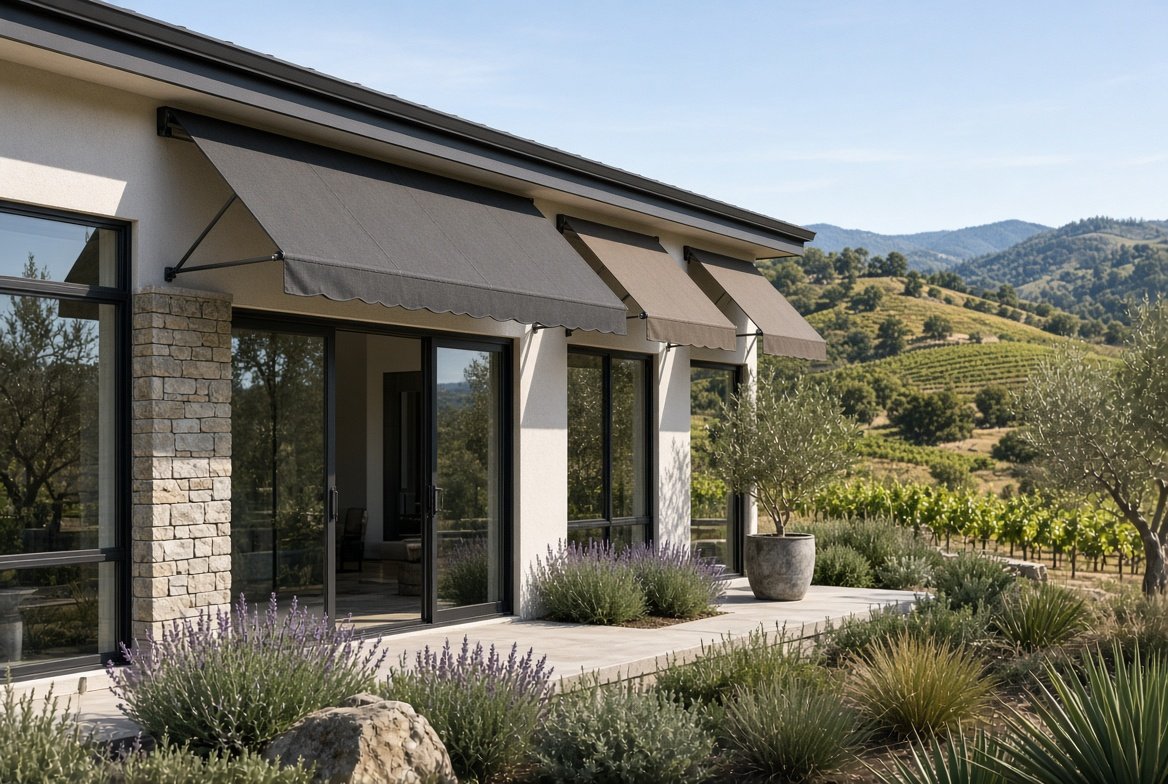
Contemporary residences often favor sleek, minimalist retractable systems that disappear into compact cassettes when not in use. Lateral-arm and vertical awnings expand the range of solutions, allowing coverage for larger window banks or sliding doors that open onto outdoor entertaining areas. Color and pattern choices should harmonize with existing exterior paint, roofing, and landscaping so the awnings enhance rather than compete with the overall design of the property.
Installation Considerations for Optimal Performance
Correct installation determines how effectively outdoor window awnings perform over time. Proper mounting must account for the structural integrity of the wall or window frame, local wind loads, and the need for secure anchoring that prevents movement during seasonal storms. In Sonoma, where occasional high winds can occur, reinforced brackets and quality hardware become especially important. Professional measurement ensures that the awning projects far enough to create meaningful shade without interfering with neighboring windows, walkways, or landscape features.
Drainage and water runoff must also be planned so that rainwater does not pool against the house or cascade onto frequently used outdoor areas. Retractable systems require attention to motor placement, power supply, and remote or sensor controls that allow automatic response to wind or sun intensity. When these details are addressed carefully, the finished installation delivers reliable shade, weather protection, and visual appeal for many years.
Energy Efficiency and Long-Term Value
Outdoor window awnings contribute measurable energy savings by reducing the need for mechanical cooling. Studies of similar Mediterranean climates demonstrate that effective exterior shading can lower cooling energy use by a substantial percentage during the hottest months. This reduction translates into lower utility bills and decreased wear on air-conditioning equipment.
Over the lifespan of a quality awning system, the cumulative savings often offset a meaningful portion of the initial investment. In addition, protected windows and reduced interior fading help preserve the condition of furnishings, flooring, and finishes, further supporting long-term property value. For homeowners planning renovations or preparing a property for sale, well-chosen window awnings signal thoughtful attention to comfort and efficiency, features that appeal to buyers familiar with Sonoma’s climate demands.
Maintenance Practices That Extend Service Life
Routine care keeps outdoor window awnings looking attractive and functioning properly. Fabric surfaces benefit from periodic cleaning with mild soap and water to remove dust, pollen, and environmental residue common in the region. Retractable mechanisms should be inspected for smooth operation, and moving parts may require occasional lubrication according to manufacturer recommendations.
Metal frames and hardware should be checked for signs of corrosion or loose fasteners, particularly after winter storms. In areas where oak trees or other vegetation shed debris, more frequent cleaning prevents staining or abrasion of the fabric. Prompt attention to minor issues, such as a slightly misaligned arm or a frayed edge, prevents small problems from becoming larger repairs. With consistent maintenance, quality awnings continue to deliver shade and protection through many seasons of Sonoma weather.
Design Integration with Local Architecture and Outdoor Living
Sonoma properties often blend indoor and outdoor spaces through large windows, French doors, and covered patios. Outdoor window awnings support this lifestyle by creating shaded zones that encourage year-round use of exterior areas. When coordinated with existing pergolas, trellises, or landscape lighting, awnings become part of a cohesive outdoor living design. Color selection can echo the earthy tones of stucco, the warmth of wood siding, or the cooler palette of modern metal and glass.
For historic homes, subtle traditional profiles respect original character while still providing modern performance. Contemporary residences may incorporate motorized systems that integrate with smart-home controls, allowing owners to adjust shade levels remotely or according to scheduled preferences. Thoughtful design ensures that the awnings feel like a natural extension of the home rather than an afterthought.
Professional Guidance for Lasting Results
Selecting and installing outdoor window awnings involves technical decisions about projection depth, fabric performance, structural attachment, and local building considerations. Working with experienced specialists helps homeowners navigate these choices and avoid common pitfalls such as inadequate coverage or improper mounting.
Morgan Outdoor Living, Inc brings focused expertise in outdoor living solutions tailored to the needs of Sonoma properties, ensuring that each installation balances aesthetic goals with practical performance in the local climate. Their approach emphasizes careful assessment of site conditions, material suitability, and long-term durability so that the finished awnings deliver reliable comfort and visual harmony.
FAQs
How much energy can outdoor window awnings save in Sonoma summers?
Exterior shading can meaningfully reduce cooling loads by intercepting sunlight before it enters the home. The exact savings depend on window orientation, glass type, and usage patterns, but many households notice lower air-conditioning demand during peak heat periods.
Are retractable awnings practical for Sonoma’s occasional windy days?
Modern retractable systems include wind sensors that automatically retract the fabric when conditions become too strong. Combined with robust frames and quality hardware, these features allow safe operation while still providing convenient shade on calmer days.
What fabric types hold up best against Sonoma’s sun and seasonal rain?
Solution-dyed acrylic and high-performance polyester fabrics resist fading, mildew, and moisture. These materials maintain color and strength under intense ultraviolet exposure and recover well after wetting.
Can outdoor window awnings be customized to match existing architecture?
Yes. Frame styles, fabric colors, valance shapes, and projection depths can be selected to complement both traditional and contemporary homes throughout Sonoma County.
How often should outdoor window awnings be cleaned and inspected?
A light cleaning once or twice a year is usually sufficient, with additional attention after heavy pollen seasons or storms. Annual inspection of hardware and mechanisms helps identify any adjustments needed for continued smooth performance.
Do window awnings require special permits in Sonoma County?
Requirements vary by location and the scale of the installation. Professional installers typically assist with any necessary documentation so that the project complies with local regulations.