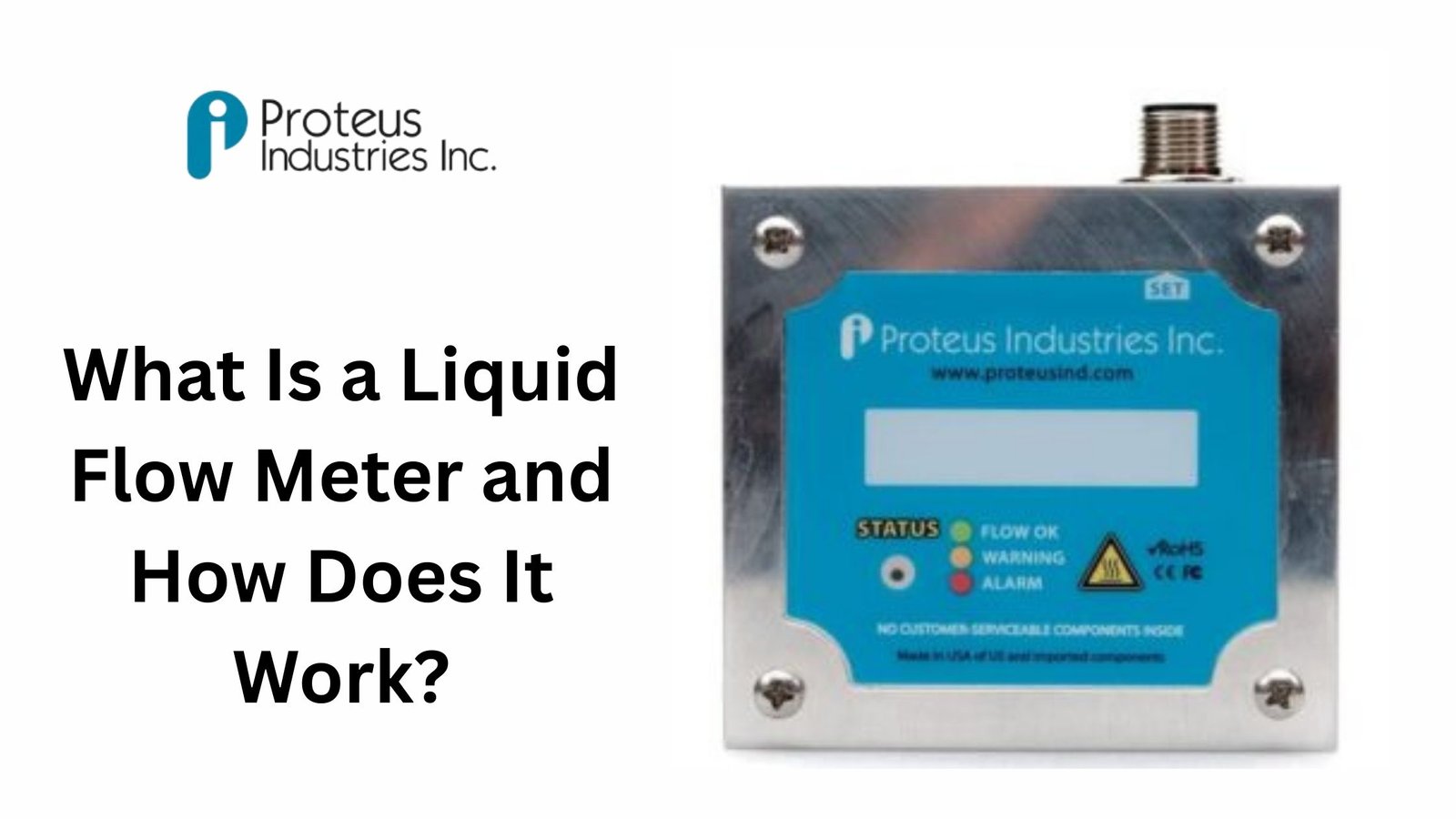
Accurately measuring liquid flow is essential in many industrial applications, from manufacturing plants to water treatment facilities. Proper flow measurement helps businesses maintain efficiency, ensure product quality, and control operational costs. Liquid flow meters play a critical role in monitoring the volume of fluid flowing through pipelines, tanks, or systems over a specific period. Without reliable flow measurement, processes can suffer from inefficiencies, safety risks, and regulatory non-compliance. This article explains what a liquid flow meter is, why liquid flow measurement is important, and how different flow meters work. It also covers the main types, key components, common applications, and factors to consider when choosing the right liquid flow meter.
What Is a Liquid Flow Meter?
A liquid flow meter is a device used to measure the flow rate or total volume of liquid moving through a pipe or system. Its primary purpose is to provide accurate data on the amount of liquid transferred or consumed during a process. Liquid flow meters are widely used in industries where precise fluid measurement is necessary for billing, quality control, or system optimization. Flow measurements are typically expressed in units such as liters per minute (L/min), cubic meters per hour (m³/h), or gallons per minute (GPM). By converting physical flow into readable data, a liquid flow meter enables operators to monitor and control fluid movement effectively.
Why Liquid Flow Measurement Is Important?
Liquid flow measurement is vital for maintaining accurate process control in industrial operations. When flow rates are measured correctly, systems can operate at optimal levels, reducing energy consumption and minimizing waste. Accurate flow measurement also helps prevent overfilling, leakage, and equipment damage, which improves overall safety. In controlled industries such as chemicals, pharmaceuticals, and water treatment, precise liquid flow measurement supports compliance with industry standards and government regulations. Additionally, reliable flow data allows businesses to analyze performance, identify inefficiencies, and make informed decisions that improve productivity and reduce operational costs.
Basic Principle of Liquid Flow Measurement
Liquid flow measurement is based on the movement of fluid through a pipeline or channel. Flow is generated by pressure differences, gravity, or pumping systems, causing the liquid to move at a certain velocity. The flow rate depends on the relationship between the velocity, the cross-sectional area, and the volume of the liquid. Most liquid flow meters measure either the velocity of the liquid or the volume passing through the meter over time. Different measurement methods are used depending on the application, such as mechanical movement, electromagnetic fields, ultrasonic waves, or pressure changes. These principles allow flow meters to convert physical liquid movement into measurable signals.
How a Liquid Flow Meter Works?
A liquid flow meter works by detecting the movement of liquid and converting it into an electrical or mechanical signal. The internal sensor or measuring element reacts to the flow, such as rotating, vibrating, or detecting changes in pressure or electromagnetic fields. This reaction generates a signal proportional to the flow rate. The signal is then processed by the meter’s electronics or transmitter, which converts it into readable data. The measured flow information is displayed locally or transmitted to control systems like PLCs or SCADA systems. This process enables real-time monitoring and accurate flow control.
Key Components of a Liquid Flow Meter
A liquid flow meter consists of several essential components that work together to provide accurate measurement. The flow sensor detects liquid movement within the system. The transmitter and internal electronics process the sensor signal and convert it into usable data. Many flow meters include displays that show real-time flow rates, totals, or diagnostic information. Output signals, such as analog, pulse, or digital communication, enable integration with control systems. The housing and process connections protect internal components and ensure compatibility with pipelines and operating environments.
Factors Affecting Liquid Flow Meter Performance
Several factors can influence the performance and accuracy of a liquid flow meter. Liquid properties such as viscosity, temperature, density, and electrical conductivity play a major role in measurement reliability. Flow range and pressure conditions must match the meter’s design specifications to avoid inaccurate readings. Installation conditions, including pipe length, straight-run requirements, and flow disturbances, also affect performance. Improper installation can lead to turbulence, air bubbles, or uneven flow profiles. Understanding these factors helps ensure the flow meter operates correctly and delivers consistent, reliable results.
Common Applications of Liquid Flow Meters
Liquid flow meters are used across a wide range of industries and applications. In industrial manufacturing, they monitor cooling water, lubricants, and process fluids. Water and wastewater treatment facilities rely on flow meters for distribution, dosing, and compliance reporting. In oil, gas, and chemical processing, accurate flow measurement ensures safe handling of liquids and proper blending. Food and beverage production uses liquid flow meters to maintain hygiene standards and ensure precise ingredient measurement. Their versatility makes liquid flow meters essential in both simple and complex fluid systems.
Benefits of Using Liquid Flow Meters
Using liquid flow meters provides numerous operational benefits. They deliver accurate, reliable measurements, improvingmeasurementsimprove process consistency and product quality. By monitoring flow rates, businesses can optimize resource usage and reduce waste. Liquid flow meters also help lower operational costs by preventing losses and identifying inefficiencies. Integration with automation systems enables real-time monitoring, data logging, and remote control. Overall, liquid flow meters support better decision-making, enhanced safety, and improved system performance across industrial and commercial applications.
Conclusion
A liquid flow meter is an essential instrument for measuring and controlling the movement of liquids in various industries. Understanding how liquid flow meters work and the principles behind their operation helps users select the right solution for their applications. Accurate liquid flow measurement improves efficiency, safety, and regulatory compliance while reducing operational costs. By choosing the appropriate type and ensuring proper installation, businesses can achieve reliable, precise flow measurement. Liquid flow meters remain a critical component of modern industrial and commercial fluid systems.