In the high-stakes environment of a professional kitchen, speed and consistency are the benchmarks of success. Whether you are running a bustling fast-food outlet, a high-end bistro, or a high-volume institutional cafeteria, the equipment you choose dictates your throughput and your bottom line. Among the most essential yet often misunderstood tools in a chef’s arsenal is the commercial microwave.
While residential units are fine for popping corn at home, they lack the durability and power required for a commercial line. To maintain a competitive edge, savvy operators turn to specialized microwave ovens for restaurants to ensure every dish meets rigorous standards.
In this comprehensive guide, we will explore why professional-grade microwaves are indispensable and how partnering with the right food service equipment distributors can transform your kitchen operations.
The Critical Difference: Commercial vs. Residential Microwaves
It is a common temptation for new restaurateurs to pick up a high-end consumer microwave to save on initial startup costs. However, this is a frequent “false economy.” Commercial units are engineered for the “heavy-duty” reality of a kitchen.
1. Built for Durability
A household microwave might be used three or four times a day. In a restaurant, a microwave might be opened and closed sixty times an hour. Commercial models feature reinforced door hinges, high-quality stainless steel interiors, and cooling systems designed to run for hours without overheating.
2. Powerful Consistency
Residential microwaves use “stirrers” or rotating turntables to distribute heat, which are prone to breaking under heavy use. Professional units utilize sophisticated wave-guide systems and dual magnetrons (in higher wattage models) to ensure that heat is distributed evenly throughout the food, eliminating the “cold spots” that can lead to food safety concerns.
3. Programmable Precision
In a fast-paced environment, you cannot afford to have staff guessing cook times. Professional ovens allow for multi-stage programming. With the touch of a single button, a cook can defrost, heat, and brown a dish, ensuring that the quality remains identical regardless of who is behind the line.
Key Features to Look for in Microwave Ovens for Restaurants
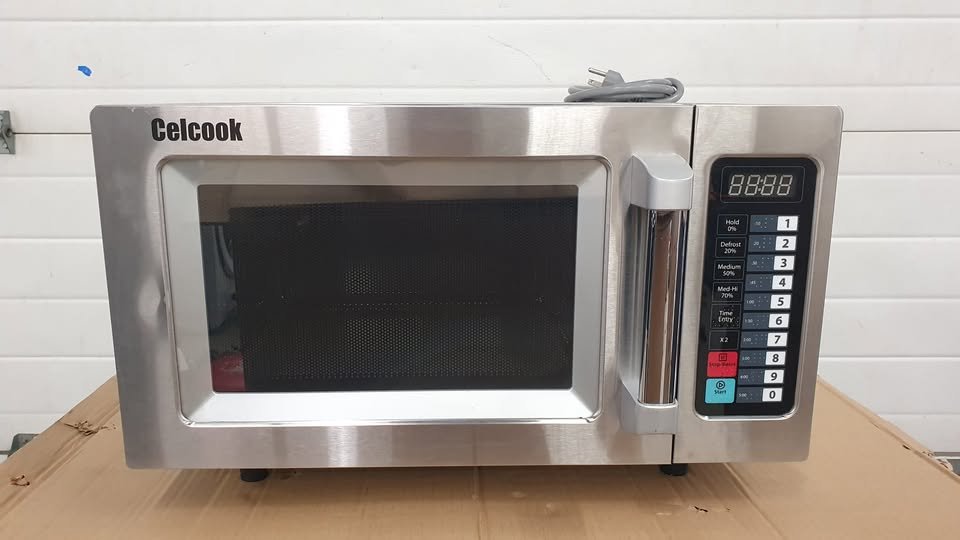
When browsing the Celcook line or other professional series, consider these three pillars of performance:
Wattage and Speed
Time is money. A 1000-watt oven is suitable for light-duty tasks like heating desserts or rolls. However, for primary cooking or rapid steaming, 1800 to 2100-watt units are the industry standard. These high-wattage machines can reduce cooking times by up to 50%, allowing for faster table turnover.
Ease of Maintenance
Health inspections wait for no one. Commercial ovens are designed with “cleanability” in mind. Look for models with removable ceramic shelves and air filters that can be popped out and cleaned in seconds. This prevents grease buildup and extends the life of the magnetron.
Footprint and Stackability
Kitchen real estate is expensive. Many modern commercial microwaves are designed to be stackable, allowing you to double your cooking capacity without sacrificing any additional counter space.
Why Your Choice of Distributor Matters
Selecting the equipment is only half the battle; knowing where to source it is the other. The role of food service equipment distributors extends far beyond just shipping a box to your door.
Expert Consultation
A reputable distributor understands the nuances of the Canadian food service landscape. They don’t just sell you a product; they analyze your menu, your volume, and your kitchen layout to recommend the specific model that maximizes your ROI.
Nationwide Support and Parts
What happens if a piece of equipment goes down on a Friday night? Choosing a distributor with a robust national service network ensures that you have access to parts and authorized technicians quickly. This minimize downtime and prevents lost revenue.
Quality Assurance
Top-tier distributors curate their catalogs to include only the most reliable brands. By sourcing from industry leaders like Celco, you gain access to brands like Celcook and Celcold, which are specifically engineered to meet the demands of the Canadian market, including energy efficiency standards and safety certifications.
Enhancing Your Menu with High-Speed Technology
The modern “microwave” has evolved. Many high-performance microwave ovens for restaurants now incorporate convection and microwave technology. This allows you to toast, brown, and crisp foods at lightning speeds.
Imagine serving a perfectly toasted panini in under 60 seconds or a baked pasta dish with a bubbling cheese crust in a fraction of the time a traditional oven would take. This technology allows “express” locations to offer a gourmet menu that was previously impossible due to time constraints.
Integration into Different Food Service Sectors
The versatility of professional microwave ovens makes them a staple across various sectors:
- Healthcare & Long-Term Care: Ensuring meals are served at the precise temperature required for patient safety and satisfaction.
- Quick Service Restaurants (QSR): Speed is the primary metric. High-wattage microwaves ensure that “fast food” remains fast without sacrificing the core temperature of the ingredients.
- Full-Service Dining: Used primarily for “behind the scenes” prep, such as melting butter, steaming vegetables to order, or quickly heating house-made sauces.