Aluminum has become a core material in automotive, aerospace, electronics, and appliance manufacturing due to its lightweight, corrosion resistance, and excellent strength-to-weight ratio. However, joining aluminum effectively presents unique challenges compared to steel, especially when it comes to spot welding. For engineers, OEMs, and factory managers looking to streamline production without compromising quality, choosing the right spot welder for aluminum is critical.
At Heron Welder, we specialize in industrial welding solutions that combine precision, reliability, and automation. Our resistance welding machines, spot welders, and advanced controllers are designed to help manufacturers achieve consistent, high-quality aluminum welds across diverse applications.
Understanding Aluminum Spot Welding
Spot welding is a type of resistance welding where two or more metal sheets are joined by applying heat generated from electrical resistance and pressure through electrodes. For aluminum, this process requires careful consideration due to its unique properties:
- High thermal conductivity: Aluminum dissipates heat quickly, requiring higher current or longer weld times compared to steel.
- Oxide layer formation: Aluminum naturally forms a tough oxide layer that can hinder electrical contact during welding.
- Softness and ductility: Excessive pressure or heat can distort sheets or create weak welds.
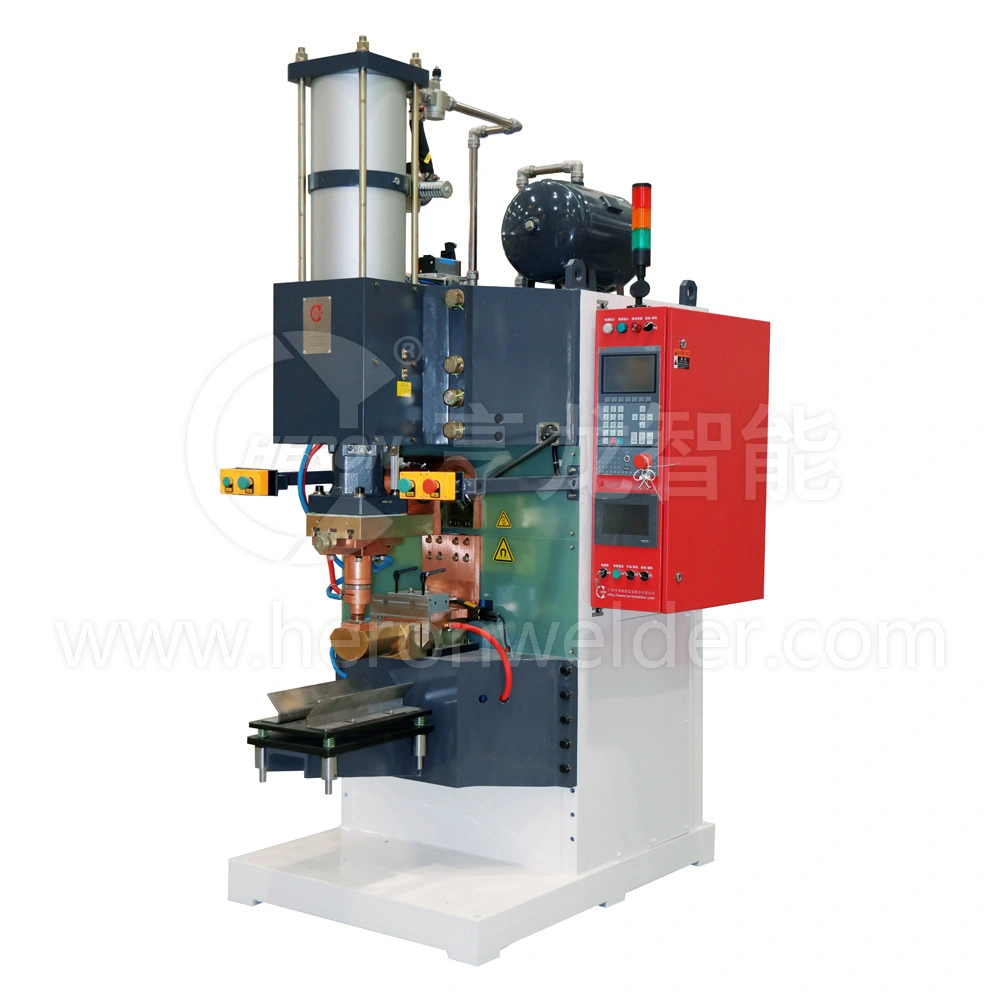
Heron’s MFDC (Medium-Frequency Direct Current) spot welders are optimized for aluminum welding. MFDC technology delivers precise, high-current pulses with controlled energy, enabling uniform welds while minimizing electrode wear and heat distortion.
Key Applications of Spot Welding Aluminum
Aluminum spot welding has wide-ranging applications across industries where lightweight metal joining is essential:
Automotive Industry
Aluminum is increasingly used for vehicle bodies, hoods, and chassis components. Spot welding ensures strong joints in high-volume production lines, supporting electric vehicles (EVs) and lightweight conventional cars.
Aerospace and Aviation
Airframe panels, interior components, and brackets often require precise welding. Automated aluminum spot welders offer repeatable, high-quality joints while reducing manual labor and maintaining structural integrity.
Electronics and Appliances
Consumer electronics, heat sinks, and appliance enclosures often use thin aluminum sheets. Spot welding provides clean, compact joints suitable for tight tolerances and mass production.
Industrial and Heavy Equipment
In manufacturing of construction machinery, HVAC systems, and industrial cabinets, aluminum spot welding allows efficient assembly of durable, corrosion-resistant components.
Choosing the Right Spot Welder for Aluminum
Selecting a suitable spot welder for aluminum involves evaluating several factors:
1. Welding Current and Control
Aluminum requires higher peak current due to rapid heat dissipation. Advanced MFDC spot welders from Heron feature precise current monitoring and adaptive control, ensuring weld consistency across sheet thicknesses.
2. Electrode Material and Design
Electrode tips must withstand high currents and reduce sticking. Copper alloys with specialized coatings are commonly used. Heron provides custom electrode solutions to extend lifespan and maintain weld quality.
3. Automation Compatibility
For high-volume production, integrating spot welders with robotic arms, conveyors, and automated feeders ensures efficient, consistent welding cycles. Heron offers complete automation solutions, including welding guns, controllers, and production line integration.
4. Sheet Thickness and Stack Configuration
Aluminum sheets can vary from 0.5 mm in electronics to over 3 mm in automotive panels. Spot welders must adjust parameters to account for sheet thickness, number of layers, and joint configuration.
Advantages of Using Heron’s Aluminum Spot Welders
Heron Welder’s machines deliver measurable advantages for manufacturers working with aluminum:
- Precision and repeatability: MFDC technology ensures consistent welds with minimal rework.
- Reduced electrode wear: Optimized energy delivery and electrode design extend tip life.
- Faster production cycles: High-speed welding capabilities improve throughput in mass production.
- Automation-ready solutions: Fully compatible with robotic arms and automated lines for seamless integration.
- Expert support: Heron’s technical team helps select, install, and calibrate welding systems tailored to your applications.
Best Practices for Aluminum Spot Welding
To maximize weld quality and machine performance, manufacturers should follow these best practices:
- Surface preparation: Clean aluminum sheets to remove oils and oxides for better electrical contact.
- Proper electrode maintenance: Regularly dress electrode tips to prevent sticking and inconsistent welds.
- Optimize welding parameters: Adjust current, pressure, and weld time based on sheet thickness and alloy.
- Test and measure welds: Use destructive or non-destructive testing to validate weld strength.
- Integrate automation: Leverage robotic handling and programmable controllers for repeatable, high-volume production.
Spot Welding vs. Alternative Aluminum Joining Methods
While spot welding is highly efficient, alternative methods exist:
| Joining Method | Pros | Cons |
|---|---|---|
| Mechanical Fastening (rivets, screws) | Simple, easy to inspect | Adds weight, potential for vibration loosening |
| Adhesive Bonding | Smooth appearance, distributes stress | Longer curing times, less heat resistance |
| Friction Stir Welding | Strong, high-quality joints | High equipment cost, limited to linear joints |
| Laser Welding | Precise, minimal distortion | Higher capital cost, requires laser safety |
Spot welding remains ideal for high-volume, cost-sensitive, lightweight assemblies, especially when integrated into automated production lines.
FAQs: Spot Welder for Aluminum
Q1: Can all spot welders handle aluminum?
A1: No. Aluminum requires specialized MFDC or capacitor discharge spot welders designed to manage high thermal conductivity and oxide layers.
Q2: How do I prevent electrode sticking on aluminum?
A2: Use copper alloy electrodes with proper coatings, maintain regular tip dressing, and optimize welding current and pressure.
Q3: Is automation necessary for aluminum spot welding?
A3: While manual welding is possible for small batches, automation ensures consistent weld quality, higher speed, and repeatability for industrial production.
Q4: What is the typical sheet thickness for aluminum spot welding?
A4: Heron spot welders can handle aluminum sheets from 0.5 mm to over 3 mm, adjusting parameters for single or stacked layers.
Q5: Can spot welding replace mechanical fasteners?
A5: In many high-volume applications, yes. Spot welding reduces weight and labor while providing strong, durable joints.
Partner with Heron for Aluminum Spot Welding Excellence
Choosing the right spot welder for aluminum is key to optimizing production efficiency, quality, and cost-effectiveness. Heron Welder offers industry-leading MFDC spot welders, custom electrodes, controllers, and automated solutions that empower manufacturers to achieve reliable, repeatable aluminum joints.
Whether you are an automotive OEM, electronics manufacturer, or automation integrator, our technical experts can help design and implement a welding solution tailored to your production needs.
Request a quote or consult with Heron today to explore customized spot welding and automation solutions for aluminum manufacturing.