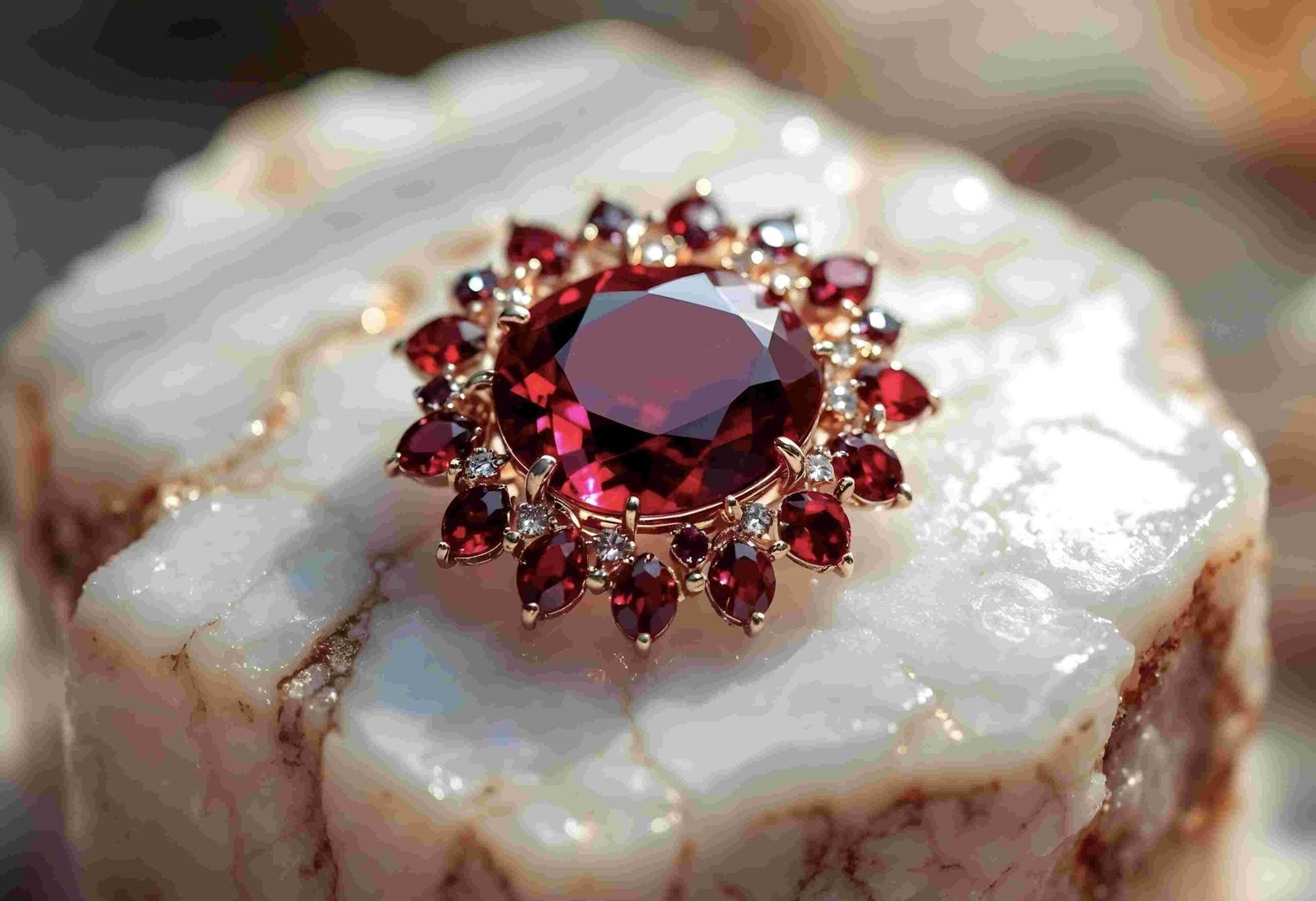
Ruby gemstones command attention with their passionate red color and brilliant fire, representing the pinnacle of colored gemstone jewelry. These precious stones, like sapphires members of the corundum family, combine exceptional hardness with breathtaking beauty. The intense red of fine rubies—ranging from vibrant pinkish-red to deep blood-red—has symbolized love, passion, courage, and power throughout history, making ruby jewelry both visually striking and symbolically meaningful.
The most coveted ruby color, often described as “pigeon’s blood red,” exhibits a pure, vibrant red with slight blue undertones that create visual depth without appearing purple or brown. This ideal color, combined with excellent transparency and internal fire, creates gems that seem to glow with internal light. The intensity of color in rubies directly affects their value, with vivid, saturated stones commanding premium prices regardless of size.
Ruby rings make powerful fashion statements. Engagement rings featuring ruby center stones offer dramatic alternatives to traditional diamonds, expressing bold personality and timeless romance. The durability of rubies—rating 9 on the Mohs hardness scale—makes them practical for daily wear in engagement rings and other frequently worn jewelry. Cocktail rings with substantial rubies create show-stopping glamour, while more delicate ruby rings add sophisticated color accents to any outfit.
The combination of rubies and diamonds creates particularly striking jewelry. The contrast between ruby’s warm red and diamond’s brilliant white fire generates visual drama while allowing each gemstone to enhance the other. Halo settings surrounding rubies with diamonds amplify brilliance and make the center stone appear larger. Three-stone designs alternating rubies and diamonds create balanced elegance, while elaborate designs incorporating both gems showcase jeweler’s artistry.
Ruby necklaces range from simple pendants to elaborate statement pieces. A single ruby suspended from a delicate chain offers elegant versatility, easily transitioning from casual to formal settings. Multi-stone ruby necklaces, particularly those featuring graduated gems, create impressive impact for special occasions. Vintage-inspired designs often incorporate intricate metalwork framing rubies within artistic compositions that evoke historical glamour.
Earrings featuring rubies provide opportunities for color and elegance. Stud earrings with round or cushion-cut rubies deliver sophisticated color appropriate for professional environments and evening events alike. Drop earrings allow rubies to catch light dynamically, creating sparkle with movement. Chandelier earrings incorporating multiple rubies generate dramatic effect perfect for formal occasions, while huggie hoops with ruby accents offer contemporary style.
Origin significantly influences Rubby characteristics and value. Burmese rubies, particularly those from the Mogok region, are legendary for their exceptional color and quality, commanding the highest prices in the gemstone market. Thai rubies typically display darker, brownish-red tones. African rubies from Mozambique and Madagascar have gained prominence in recent years, offering excellent quality at more accessible price points. Understanding origin helps in appreciating the unique characteristics of individual stones.
Natural inclusions within rubies, while generally less accepted than in emeralds, can actually add value when they create special optical effects. The most famous example is the star ruby, where needle-like rutile inclusions create asterism—a six-rayed star that appears to float across the stone’s surface when viewed under direct light. These phenomenal rubies possess unique charm, valued by collectors for their rarity and mystical appearance.
Heat treatment of rubies is standard industry practice, enhancing color and clarity in most stones available today. This treatment is permanent and stable, widely accepted within the jewelry industry. Untreated rubies with fine color are exceptionally rare and command substantial premiums. Clarity enhancement through fracture filling is also common, though less stable than heat treatment. Reputable jewelers disclose all treatments, ensuring informed purchases.
The symbolism and tradition surrounding rubies enhances their significance. As July’s birthstone, rubies make meaningful gifts for summer birthdays. The gemstone traditionally celebrates fifteenth and fortieth wedding anniversaries, symbolizing enduring passion in long-term relationships. Rubies are associated with vitality, prosperity, and protection, making them appropriate gifts for various life milestones and celebrations.
Ruby bracelets combine bold color with elegant wrist adornment. Tennis bracelet styles featuring rubies create dramatic statements, particularly when alternated with diamonds or set in intricate patterns. Bangle bracelets with ruby accents offer modern sophistication, while charm bracelets featuring ruby-set charms add personalized style. The durability of rubies makes them practical for bracelets subject to more wear than necklaces or earrings.
Investment in quality ruby jewelry can provide both aesthetic pleasure and financial appreciation. Fine rubies, particularly untreated stones with exceptional color from prestigious origins like Burma, have appreciated significantly over time. Even treated rubies of good quality maintain value well, as demand for these passionate red gems continues strong worldwide. This investment potential adds practical dimension to the emotional and aesthetic appeal of ruby jewelry.
Synthetic and simulated rubies exist in the marketplace, making informed purchasing important. Lab-created rubies possess the same chemical and physical properties as natural rubies but lack the rarity and investment value of mined gems. Glass or other materials may simulate ruby’s appearance without sharing its properties. Purchasing from reputable jewelers who provide proper disclosure and certification ensures authenticity and quality.
Caring for ruby jewelry maintains its beauty across generations. The gem’s hardness makes it resistant to scratching and damage, though settings and mountings still require care. Cleaning with warm water, mild soap, and soft brushing removes accumulated dirt and oils. Ultrasonic cleaners are generally safe for rubies unless heavily fractured or filled. With appropriate care, ruby jewelry remains brilliant and vibrant, becoming treasured heirlooms carrying both monetary and sentimental value through families.