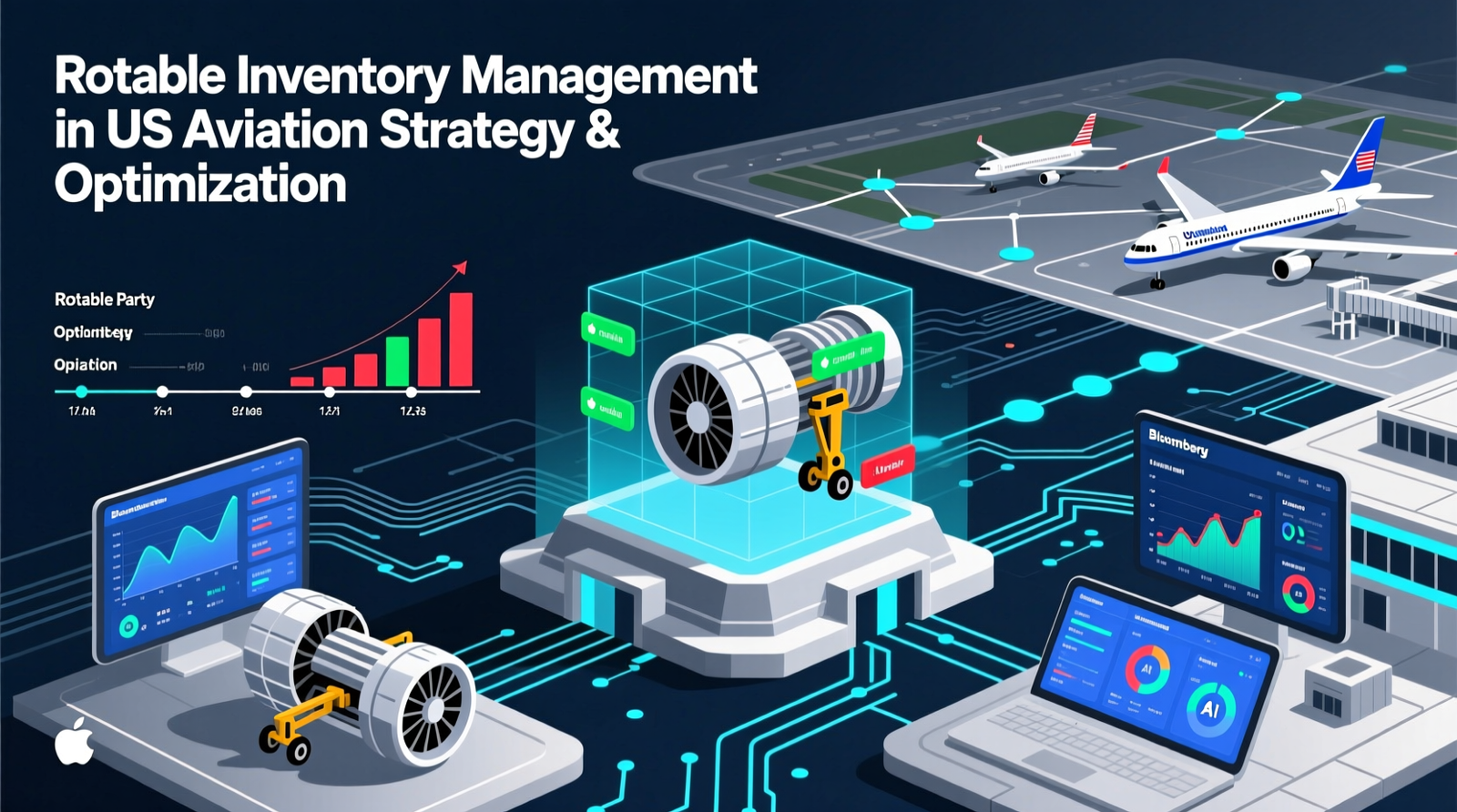
In the high-stakes ecosystem of United States aviation, where operational readiness intersects with razor-thin profit margins, effective rotable inventory management stands as a critical pillar of success. Unlike consumable parts used once or repairable items with limited life, rotable components—such as landing gear, actuators, pumps, and avionics modules—represent a unique class of asset.
These are high-value parts designed to be removed, repaired, overhauled, and returned to serviceable stock multiple times throughout their operational lifespan. For airlines, maintenance repair organizations (MROs), and parts suppliers across the USA, mastering the complex dance of rotable logistics is not merely a logistical concern; it is a fundamental financial and operational strategy that directly impacts aircraft availability, maintenance costs, and regulatory compliance.
The Core Challenge of Rotable Pooling and Availability
The central dilemma in rotable management is the balancing act between availability and cost. An aircraft on the ground (AOG) awaiting a critical rotable part incurs astronomical costs in lost revenue and disruption. To mitigate this, operators must invest in an inventory of serviceable rotables.
However, these components often carry price tags ranging from tens of thousands to millions of dollars each. Tying up excessive capital in a deep inventory is financially unsustainable. Consequently, the industry frequently relies on rotable pooling programs. These collaborative agreements, often facilitated by specialized vendors or consortiums, allow multiple operators to share access to a common pool of rotables.
This model dramatically reduces the capital investment required per participant while maintaining high serviceable part availability. Success in this area hinges on sophisticated forecasting, reliable repair turnaround times (TAT), and robust contractual agreements that define service levels, responsibilities, and cost-sharing mechanisms.
Financial Dynamics and Asset Tracking
From a financial perspective, rotables are dynamic balance sheet assets, not expenses. Their management directly influences key metrics like return on assets (ROA) and total cost of ownership (TCO). Each rotable part cycles through distinct phases: serviceable on-wing, removed and in-transit, undergoing repair/overhaul, and finally awaiting redeployment.
Advanced tracking systems utilizing barcodes, RFID, and integrated enterprise resource planning (ERP) software are indispensable. These systems provide real-time visibility into an asset’s location, condition, maintenance history, and value.
Accurate tracking prevents loss, optimizes repair cycles, ensures compliance with FAA-mandated traceability per Part 43 and 145 regulations, and supports precise accounting practices, including depreciation schedules. Effective financial control also involves strategic decisions about repairing versus replacing, managing obsolescence, and disposing of assets at the end of their economic life.
The Integral Role of MRO and Supply Chain Coordination
The performance of the rotable ecosystem is inextricably linked to the efficiency and reliability of the MRO supply chain. The repair loop—the journey from unserviceable removal to certified serviceable return—is where significant time and cost variables are introduced. Managing this requires seamless coordination with FAA-certified repair stations.
Key performance indicators (KPIs) such as guaranteed turnaround times, repair cost accuracy, and first-pass yield rates are vital contractual elements. Furthermore, the broader supply chain for raw materials, sub-components, and parts required for the repair process must be resilient.
Disruptions, as evidenced in recent years, can cascade, causing repair backlogs and draining rotable pools. Leading US aviation firms are increasingly leveraging data analytics to predict repair needs, partnering with MROs on performance-based logistics contracts, and even vertically integrating critical repair capabilities to gain control over this vital link.
Technological Advancements and Data-Driven Forecasting
Modern rotable inventory management is being revolutionized by technology. Beyond basic tracking, predictive analytics and machine learning algorithms are now being deployed to transform reactive practices into proactive strategy. These systems analyze vast datasets—including flight schedules, component reliability (MTBUR – Mean Time Between Unscheduled Removal), historical removal rates, and shop loading—to forecast demand with remarkable accuracy.
This enables predictive provisioning, where parts are moved through the repair pipeline or positioned at hubs in anticipation of need, not in reaction to a failure. Blockchain technology is also emerging as a tool for enhancing the immutable traceability of parts, a factor of growing importance for safety and authenticity. Implementing these technologies reduces uncertainty, minimizes safety stock levels, and enables a more lean and responsive inventory model.
Regulatory Compliance and Safety Assurance
In the US aviation sector, rotable management is conducted within a strict regulatory framework enforced by the Federal Aviation Administration (FAA). Every rotable part must have complete and accurate documentation proving its airworthiness, maintenance history, and conformity. This traceability is non-negotiable.
Regulatory compliance drives many process requirements, from how parts are tagged and stored to how repairs are documented on FAA Form 8130-3. Effective inventory management systems must bake compliance into their workflows, ensuring that no serviceable part is issued without its necessary paperwork. This regulatory overhead, while essential for safety, adds layers of complexity and cost, making efficient document management a key component of the overall system.
FAQs
What is the primary difference between a rotable and a consumable part in aviation?
A rotable is a high-value component certified to be overhauled or repaired multiple times and returned to the serviceable inventory, effectively having a cyclical life.
How do rotable pools reduce costs for airlines?
Rotable pools allow multiple operators to share a communal inventory of high-value parts. This spreads the capital cost of the inventory across all pool members.
Why is turnaround time (TAT) so critical in rotable management?
The repair TAT directly determines the size of the rotable inventory required. A longer, less predictable TAT forces a company to keep more serviceable units in stock to cover the extended repair cycle, tying up more capital.
What are the key technological tools for modern rotable management?
Advanced systems include integrated ERP/MRO software platforms, RFID and barcode tracking for real-time asset visibility.
How does FAA regulation impact rotable inventory processes?
FAA regulations mandate strict traceability and documentation for every life-limited and critical rotable part.