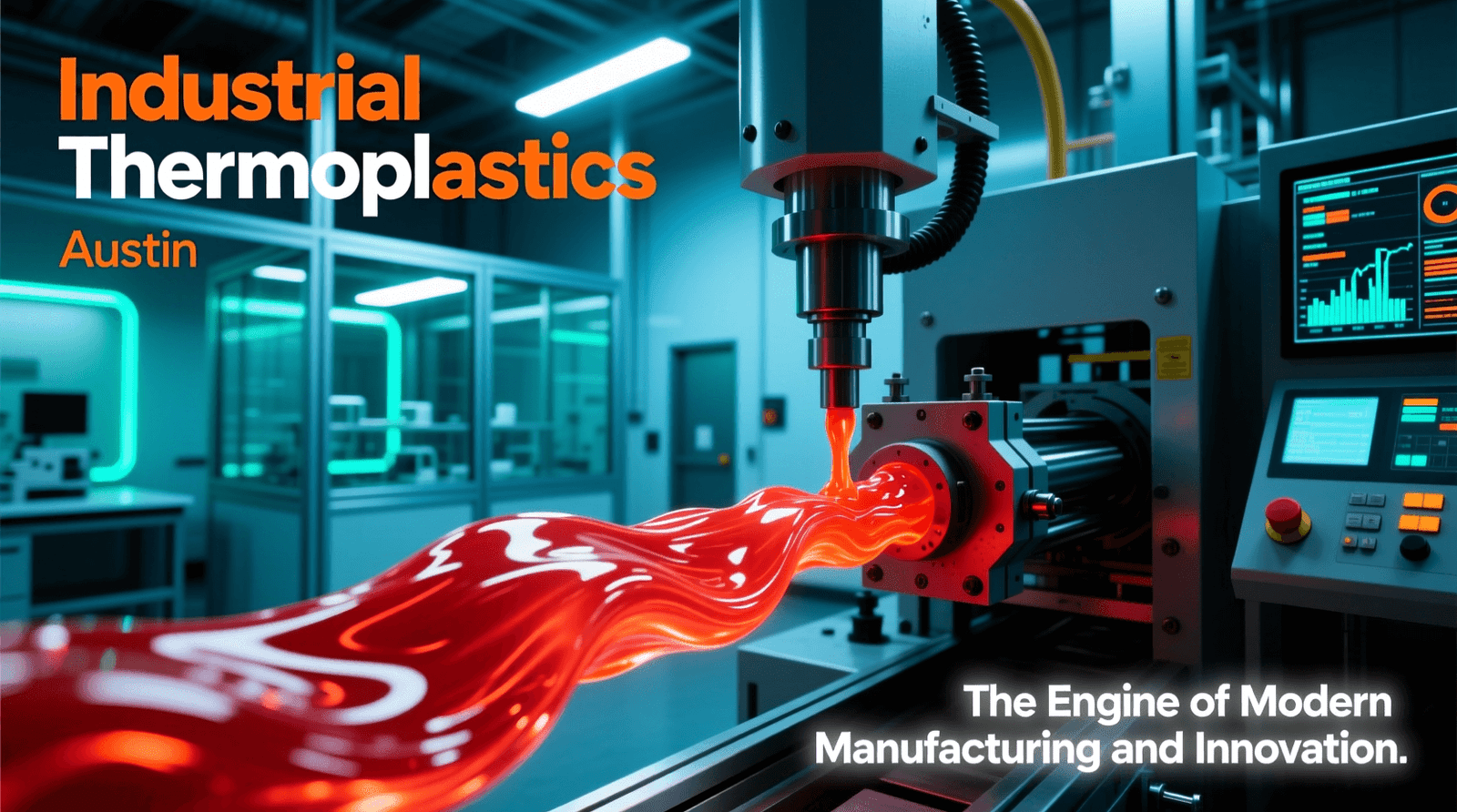
In the heart of Texas, where advanced technology and robust industry converge, Austin’s manufacturing sector is increasingly powered by a material revolution centered on industrial thermoplastics. Far beyond common consumer plastics, these high-performance polymers represent the backbone of innovation across semiconductor fabrication, aerospace engineering, medical device design, and sustainable infrastructure.
Industrial thermoplastics are synthetic materials that become pliable when heated and solidify upon cooling, allowing for intricate, repeatable, and high-strength part manufacturing through processes like injection molding, extrusion, and thermoforming.
For Austin’s diverse industrial ecosystem, access to specialized suppliers, processors, and expertise in these materials is not merely a supply chain detail; it is a critical enabler of product development, operational efficiency, and competitive advantage in a global market.
Defining the Role of High-Performance Polymers in Austin’s Economy
Industrial thermoplastics encompass a vast family of materials, each engineered with specific properties to meet extreme demands. In Austin, this translates to applications where metal or traditional materials fall short.
Key polymers include Polyether Ether Ketone (PEEK), used in semiconductor wafer carriers for its ultra-high purity and thermal stability; Polytetrafluoroethylene (PTFE or Teflon™), valued in chemical processing and aerospace for its unparalleled chemical resistance and low friction; Polyamide-imides (PAI) and Polyphenylene Sulfide (PPS), which provide high strength and flame resistance in automotive and electrical components; and advanced grades of Polycarbonate (PC) and Acrylic (PMMA), used for optical clarity and impact resistance in medical devices and lighting.
From Raw Material to Finished Part: Austin’s Thermoplastics Processing Landscape
The value of industrial thermoplastics is unlocked through specialized processing, and Austin hosts a network of skilled fabricators and molders who transform raw polymer stock into critical components. This local processing ecosystem includes precision injection molding houses producing high-volume, tight-tolerance parts for electronics enclosures and medical instruments.
It encompasses machine shops that perform CNC machining from thermoplastic plate, rod, and tube stock to create prototypes, low-volume production parts, and complex components for legacy equipment where tooling for molding is impractical. Furthermore, thermoforming operations produce large, durable panels and housings, while extrusion specialists create custom profiles, seals, and tubing.
This local capability allows Austin-based engineers and designers to collaborate closely with processors, accelerating prototyping cycles, ensuring quality control, and reducing logistical risks associated with offshore manufacturing.
Drivers of Adoption: Performance, Sustainability, and Design Freedom
Several converging factors are accelerating the adoption of industrial thermoplastics across Austin industries. The primary driver is performance enhancement; replacing metals with advanced composites or thermoplastics can reduce weight, eliminate corrosion, and integrate functionalities like color or insulation without secondary operations.
Sustainability is a growing imperative, and thermoplastics contribute significantly through recyclability. Many high-performance polymers can be reground and reused in less critical applications, and the efficiency of molding processes often results in less material waste compared to metal machining.
Additionally, the rise of bioplastics and polymers derived from renewable sources is gaining traction. Most importantly, thermoplastics offer unparalleled design freedom. Complex geometries, snap-fits, living hinges, and integrated assemblies can be molded as a single part, consolidating components, simplifying assembly, and reducing total production costs—a key advantage for Austin’s agile tech and startup community.
Critical Considerations: Material Selection, Sourcing, and Compliance
Selecting the right industrial thermoplastic is a nuanced science, and Austin-based companies rely on both deep technical expertise and reliable supply chains. The selection process involves a rigorous analysis of mechanical, thermal, chemical, and electrical requirements.
For instance, a component in an outdoor telecommunications enclosure must resist UV degradation and wide temperature swings, while a part in a portable medical device must meet biocompatibility standards and withstand repeated sterilization. Partnering with knowledgeable local suppliers and processors is crucial, as they provide access to material data sheets, chemical compatibility charts, and processing guidelines.
For regulated industries like medical, aerospace, and food processing, material traceability and certification are paramount. Reputable suppliers provide materials with full lot traceability and compliance with standards such as USP Class VI, FDA CFR 21, NSF/ANSI 61, and UL flammability ratings, ensuring end products meet stringent safety and regulatory demands.
FAQs
What are the most common applications for industrial thermoplastics in the Austin area?
Typical applications include semiconductor manufacturing components (wafer shippers, cleanroom fixtures), aerospace interiors and ducting, medical device housings and surgical tools, electrical insulation and enclosures, chemical processing equipment.
How do I choose between machining a part from thermoplastic stock versus having it injection molded?
The choice depends on volume, lead time, part complexity, and budget. CNC machining from stock is ideal for prototypes, complex one-off parts, and very low-volume production where the high cost of a mold cannot be justified.
Are industrial thermoplastics environmentally friendly?
The answer is nuanced. While derived from petrochemicals, their long service life, light-weighting benefits (which reduce energy consumption in transportation), and high recyclability contribute to sustainability.
Can local suppliers help with material testing and selection?
Yes, a key service provided by established local suppliers and processors is technical support. They can assist with material selection based on your application parameters, provide physical samples for testing.
What does “certified” or “traceable” material mean, and why is it important?
This means the material supplier can provide documentation proving the polymer resin came from an approved manufacturer and lot, and that its properties meet a specific standard (like FDA compliance for food contact).