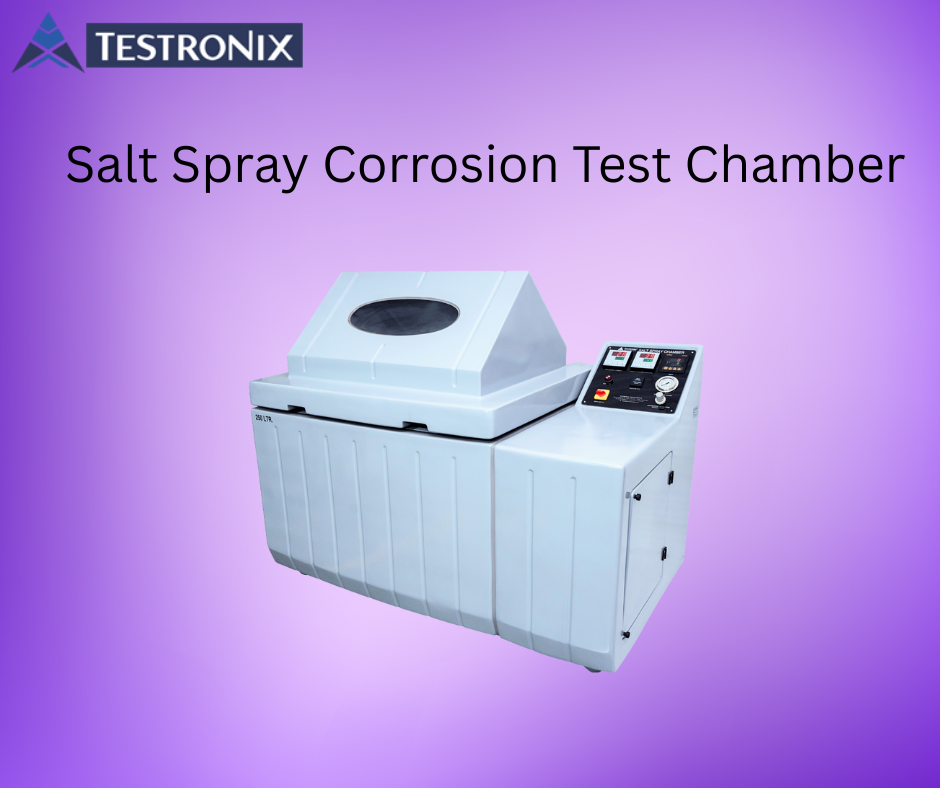
A salt spray corrosion test chamber remains one of the most widely adopted tools for evaluating the corrosion resistance of metals, coatings and finished components across global manufacturing industries. As companies aim for longer product life cycles and higher quality standards, accelerated corrosion testing becomes a strategic advantage. This equipment replicates harsh environmental conditions to reveal weaknesses before products reach end users. For manufacturers working toward durability, consistency and compliance, understanding how salt spray testing supports product performance is essential.
Key Roles of Salt Spray Testing in Industrial Quality Programs
Manufacturers use corrosion testing to measure how different materials and coatings respond to extended exposure in chemically aggressive environments. A salt spray corrosion test chamber provides repeatable and controlled conditions, allowing companies to check coating performance, validate material selections and strengthen their reliability programs. The following sections highlight exactly how manufacturers apply this testing technology across various stages of production and product development.
Manufacturers Test Coating Durability for Long Term Protection
Coatings represent a primary defense against environmental damage, making their corrosion resistance critical. A salt spray corrosion test chamber helps manufacturers verify whether protective coatings on metals can endure continuous exposure to salt laden atmospheres. Industries such as automotive, marine and consumer goods rely on this testing to examine the lifespan of powder coatings, paints, zinc coatings and other finishes. If a coating shows blistering, rust formation or delamination during testing, manufacturers can refine their formulations or adjust application methods. This assessment supports better performance in real world conditions where moisture, salt and contaminants accelerate degradation.
Manufacturers Validate Raw Material Quality Before Production
High quality raw materials form the foundation of reliable products. Manufacturers use corrosion testing to confirm whether metals and alloys meet expected resistance levels before they move into full scale production. This is especially important for stainless steel, aluminum alloys and treated metals used in demanding environments such as construction, heavy machinery and aerospace. Testing raw materials in a salt spray corrosion test chamber reduces the risk of introducing weak or substandard materials into the assembly line. It also helps manufacturers select suppliers more confidently while maintaining compliance with global corrosion resistance standards.
Manufacturers Optimize Surface Treatment Processes
Surface treatments such as galvanizing, anodizing and plating require precise control to achieve desired performance. A salt spray corrosion test chamber allows manufacturers to evaluate how process variables affect corrosion resistance. By testing samples treated under different conditions, engineers can fine tune parameters such as coating thickness, curing temperature or chemical concentration. This optimization supports consistent production outcomes and reduces the possibility of premature coating failures. Over time, such process improvements contribute to cost efficiency by lowering warranty claims, minimizing rework and enhancing brand reliability.
Manufacturers Assess Product Suitability for Harsh Environments
Products used in coastal regions, industrial zones or high humidity environments must withstand aggressive exposure. Manufacturers perform corrosion testing to determine whether their finished products can function reliably in such conditions. Hardware components, fasteners, electrical enclosures, automotive parts and outdoor equipment often undergo extended salt spray testing. By studying how these products respond to continuous salt exposure, companies can refine design, improve sealing mechanisms and choose more compatible material combinations. This proactive approach helps reduce field failures and enhances customer trust in global markets.
Manufacturers Support Research and Development Efforts
Innovation requires accurate data about material behavior. Salt spray testing plays an essential role in the research and development phase, where engineers experiment with new materials, coatings and protective treatments. A salt spray corrosion test chamber provides a controlled environment for comparing prototypes and determining which options offer superior resistance. This allows R and D teams to shorten development cycles, make evidence based decisions and introduce more competitive products. As industries adopt advanced materials and sustainable coating technologies, the importance of reliable corrosion testing continues to grow.
As manufacturers explore advanced testing technologies, many also evaluate how the salt spray machine price aligns with long term quality goals. While the investment varies depending on chamber size and features, the value it delivers through reduced failures, improved durability and stronger compliance typically outweighs the initial cost. Toward the later stages of product validation and certification, using a high precision salt spray corrosion test chamber helps companies maintain leadership in quality-sensitive markets.
Conclusion
Manufacturers that integrate salt spray testing into their quality programs achieve a higher level of confidence in material durability and coating integrity. They gain the ability to qualify raw materials, refine surface treatments, enhance product designs and accelerate innovation with reliable data. By using a salt spray corrosion test chamber at strategic points throughout the production cycle, companies safeguard product performance and support long lasting reliability for customers worldwide.