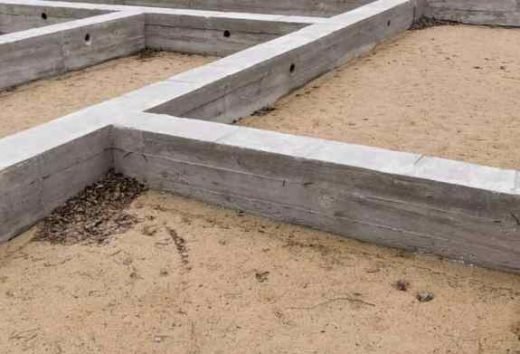
When you think about the foundations of a building, you might picture huge piles of concrete or massive underground structures. While some buildings need complex foundations, many structures rely on a simpler and highly effective method known as spread footing. Whether you’re working on a new building or just interested in how construction works, understanding spread footings is key to appreciating how strong, lasting foundations are built.
In this blog, we will explain what spread footing is, how it works, its benefits, and why it’s a popular choice in construction.
What is Spread Footing?
A spread footing is a type of foundation used to distribute the weight of a building or structure over a larger area of soil. It is made from concrete, usually reinforced with steel bars, and it serves as the base upon which walls or columns of a building are built.
The primary role of a spread footing is to “spread” the weight of the structure across a larger area of soil so that the soil doesn’t become overly compressed or damaged. By spreading the load, the spread footing prevents the building from sinking or shifting unevenly.
How Does Spread Footing Work?
When a building is constructed, the weight of the structure needs to be transferred from the top (the building) to the ground (the soil). Spread footings make this process safe and efficient. Instead of focusing all the weight on a small point, like the base of a column or wall, a spread footing distributes that weight over a larger surface area.
Imagine standing on soft ground. If you were to stand in one spot, your weight would make a dent in the ground. However, if you were to lie down, your weight would spread out over a larger area, and the ground wouldn’t compress as much. That’s exactly what a spread footing does for a building. It spreads the weight out, preventing the structure from sinking or settling unevenly.
Spread footings typically come in a rectangular or square shape and are wider than the column or wall that sits on top of them. This wide shape helps ensure that the weight is spread out evenly. When properly designed and built, spread footings are very effective at supporting buildings of various sizes.
Types of Spread Footing
There are different types of spread footings, each suited for specific situations. Let’s take a look at the most common ones:
- Slab-Type Footing
This is the simplest type of spread footing. The footing is essentially a flat, thick slab of concrete that spreads out the load from the column or wall. Slab-type footings are most often used for smaller buildings or when the load is not too heavy. - Slab and Beam Footing
In this type, the footing consists of a flat slab along with a beam that runs between the columns or walls. The beam adds strength and helps spread the load across a larger area. Slab and beam footings are often used for heavier buildings where additional support is required. - Strap Footing
A strap footing connects two or more spread footings together using a concrete strap (a long, narrow section of concrete). This type is used when two columns are too far apart to be supported by a single footing. Strap footings help evenly distribute the load between the columns. - Combined Footing
Sometimes, two or more columns are too close together to use separate spread footings for each. In such cases, a combined footing is used. This is a larger, single slab that supports multiple columns, distributing the load of both columns across the same foundation.
Why Are Spread Footings Important?
Spread footings play an essential role in ensuring that buildings stand securely and safely. They are particularly useful in preventing problems that can arise from poor soil conditions, such as settling or tilting of the building. Let’s explore why spread footings are so important:
- Distribute Load Evenly
The main purpose of a spread footing is to evenly distribute the weight of a building over the ground beneath it. Without a spread footing, the weight of the building would be concentrated at the base of each column or wall, which could cause uneven settling or even structural damage. - Prevent Structural Damage
If the weight from a building isn’t spread out properly, it could cause the soil underneath to compress too much, leading to uneven settlement. This can lead to cracks in the building’s walls, uneven floors, and even foundation failure. Spread footings prevent this by spreading the weight over a larger area and reducing the risk of settlement. - Cost-Effective
Spread footings are one of the most affordable types of foundations because they are relatively simple to design and construct. Compared to more complex foundation systems, such as piles or mat foundations, spread footings require less material and labor, making them a cost-effective solution for many projects. - Versatility
Spread footings can be used in a wide range of construction projects. They are suitable for residential homes, small commercial buildings, and even some larger structures. Because they can be designed to accommodate different soil conditions and load requirements, they are highly adaptable.
Advantages of Spread Footings
Here are some of the key advantages of using spread footings in construction:
- Simplicity in Design and Construction
Spread footings are relatively easy to design and build compared to other foundation types. This makes them a go-to choice for many contractors and developers. The process involves digging a trench, placing the footing, and pouring concrete, making it straightforward and efficient. - Cost-Effective
Since they require fewer materials and are quicker to build, spread footings tend to be more affordable than other foundation methods. This makes them ideal for smaller buildings or when you need to keep costs low. - Good for Shallow Foundations
Spread footings are typically used for shallow foundations. This means they don’t require deep excavation or complex drilling, which can save time and money during construction. Shallow foundations are also ideal when the soil is stable and strong enough to support the load. - Durability
Concrete is known for its strength and durability, and when combined with reinforcement like steel bars (rebar), spread footings are built to last. They can withstand the weight of the building for many years without needing significant maintenance. - Can Be Reinforced for Stronger Load-Bearing Capacity
Spread footings can be reinforced with steel bars or other materials to increase their strength. This makes them suitable for buildings with heavier loads or when the soil beneath is not as strong.
When to Use Spread Footings
Spread footings are best suited for certain types of construction. Here’s when you should consider using them:
- Strong and Stable Soil
Spread footings work best when the soil beneath the foundation is strong enough to support the load. If the soil is too soft or weak, the footing may not be able to spread the load effectively, and you might need to use a deeper or more complex foundation type. - Small to Medium-Sized Buildings
Spread footings are commonly used for smaller buildings or structures with a relatively low load. This includes single-family homes, small office buildings, and smaller commercial properties. - Shallow Foundations
If you need a foundation that doesn’t require deep excavation, spread footings are an excellent choice. They are ideal for shallow foundations where the soil strength is sufficient to support the building’s weight.
Limitations of Spread Footings
While spread footings are widely used, they aren’t always the best choice for every project. Some limitations include:
- Not Ideal for Weak Soil
If the soil underneath the foundation is weak or unstable, spread footings may not be able to distribute the load effectively. In such cases, deeper foundations like piles or mat foundations may be needed to ensure the stability of the building. - Limited for Heavy Loads
Spread footings are not suitable for very large or heavy structures, such as high-rise buildings or factories. These types of buildings require deeper foundations or more complex solutions to handle the weight.
Conclusion
Spread footings are one of the most commonly used types of foundations in construction. They offer a simple, cost-effective, and reliable solution for distributing the weight of a building over a larger surface area. Whether you’re building a small home or a commercial building, spread footings provide excellent support and stability, especially in areas with strong soil.
While they are not always the best choice for every situation, spread footings are ideal for shallow foundations in areas with stable soil. They help ensure that buildings remain strong, durable, and safe for many years to come.