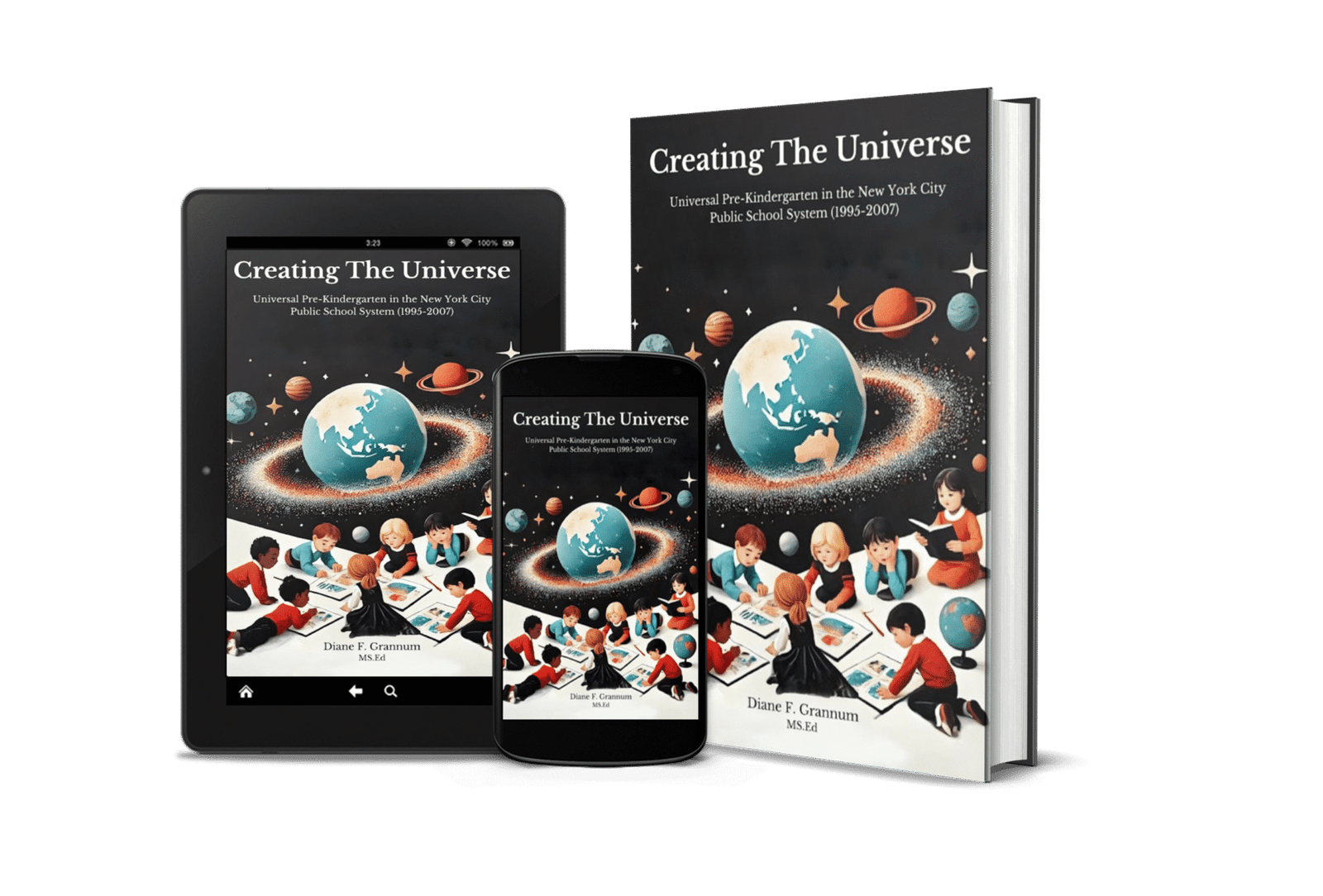
Have you ever watched a young child play and wondered what’s happening inside their mind? To us, it may look like simple fun—stacking blocks, drawing circles, or pretending to be a teacher. But in reality, something extraordinary is unfolding. A universe is being created.
This powerful idea sits at the heart of Creating the Universe by Diane F. Grannum. Her message is simple but profound: early childhood education doesn’t just prepare children for school—it shapes their entire life.
Today, parents face many decisions about their child’s education, including the important choice of private vs public preschool. Grannum’s work offers fresh insight into what truly matters—not fancy buildings or expensive programs, but meaningful learning experiences that help children grow emotionally, socially, and intellectually.
Think of a child’s mind like fertile soil. Whatever seeds you plant—confidence, curiosity, kindness—will grow and flourish. Grannum’s vision helps educators and parents become careful gardeners, nurturing each child’s unique universe.
1. Understanding the Meaning of “Creating the Universe”
More Than Just Education
Grannum uses the phrase “creating the universe” as a metaphor. She’s not talking about stars and planets. She’s talking about a child’s personal world—their thoughts, feelings, beliefs, and abilities.
Every experience a child has becomes part of their universe.
When a teacher encourages them, their universe expands.
When they feel ignored, it shrinks.
How Early Experiences Shape Identity
Children form their identity very early. By age five, much of their personality is already developing. Their confidence, curiosity, and emotional strength begin forming during these years.
This means preschool isn’t just preparation—it’s creation.
2. Why Early Childhood Education Shapes Everything
The Brain Develops Faster Than Ever
Did you know that 90% of brain development happens before age five?
This period is like a construction phase. Neural connections form rapidly, influenced by experiences, relationships, and learning.
Positive experiences strengthen brain pathways.
Negative experiences weaken them.
Long-Term Effects on Success
Children who receive quality early education often:
- Perform better academically
- Develop stronger social skills
- Have higher self-confidence
- Experience less anxiety
Early education doesn’t just help children succeed in school—it helps them succeed in life.
3. The Power of Imagination in Young Minds
Imagination Is Not Just Play
When children pretend to be astronauts, doctors, or teachers, they are practicing real-life skills.
They learn to:
- Solve problems
- Communicate ideas
- Understand emotions
Imagination is like exercise for the brain.
Imagination Builds Future Leaders
Many successful people developed strong imagination early. Why? Because imagination builds creativity, and creativity drives innovation.
Preschools that encourage imagination help children think independently.
4. Emotional Development: The Hidden Foundation
Emotions Come Before Academics
Before children can focus on learning numbers or letters, they must feel safe and confident.
Emotional security allows learning to happen.
If a child feels anxious, their brain focuses on survival, not learning.
Teaching Emotional Intelligence Early
Children need to learn:
- How to manage frustration
- How to share
- How to express feelings
These skills are more important than memorizing facts.
5. The Role of Teachers as Universe Builders
Teachers Shape More Than Knowledge
Teachers influence how children see themselves.
A supportive teacher can make a child believe, “I am capable.”
A negative teacher can make them feel, “I am not good enough.”
This belief stays with them for years.
Great Teachers Inspire Curiosity
Instead of giving answers, great teachers ask questions:
- “What do you think?”
- “Why do you think that happened?”
This encourages independent thinking.
6. Parents as Partners in Early Learning
Learning Doesn’t Stop at School
Parents play a huge role in shaping their child’s universe.
Simple actions make a big difference:
- Reading together
- Listening carefully
- Encouraging curiosity
These moments build confidence.
Children Learn by Watching You
Children copy what they see.
If you show kindness, they learn kindness.
If you show patience, they learn patience.
You are their first teacher.
7. Private vs Public Preschool: What Really Matters
Choosing between private vs public preschool can feel overwhelming. Many parents wonder: Which one is better?
The truth is, both can be excellent. The key lies in quality, not labels.
Private Preschool Advantages
Private preschools often offer:
- Smaller class sizes
- More personalized attention
- Specialized programs
Teachers may have more flexibility in teaching methods.
Public Preschool Advantages
Public preschools often provide:
- Affordable or free education
- Diverse social environments
- Structured learning standards
They ensure accessibility for all families.
What Matters Most Is the Experience
Grannum’s philosophy reminds us that what matters most is:
- Emotional support
- Encouragement
- Positive relationships
A caring teacher in a public preschool can be more impactful than an expensive private one without emotional connection.
8. How Environment Influences Brain Development
The Learning Environment Matters
The physical environment affects how children feel and learn.
Bright, welcoming spaces encourage exploration.
Cold, rigid environments can discourage creativity.
Emotional Environment Is Even More Important
Children need to feel:
- Safe
- Valued
- Understood
This emotional environment builds strong learners.
9. Play-Based Learning vs Traditional Learning
Why Play Is Powerful
Play is not a distraction from learning—it is learning.
Through play, children develop:
- Social skills
- Problem-solving skills
- Creativity
Traditional Learning Has Limitations
Memorization alone doesn’t build understanding.
Children need hands-on experiences.
They learn best by doing.
10. Technology and Modern Preschool Education
Technology Can Support Learning
Technology offers interactive learning opportunities.
Educational apps can help develop skills.
But technology should not replace human interaction.
Human Connection Comes First
Children need real conversations, not just screens.
Relationships build emotional intelligence.
Technology should support learning, not replace relationships.
11. Building Confidence and Independence Early
Confidence Shapes Future Success
Confident children are more willing to try new things.
They are not afraid of failure.
Confidence builds resilience.
Independence Encourages Growth
Allow children to:
- Make choices
- Solve problems
- Explore independently
This builds responsibility.
12. The Future of Preschool Education
Education Is Becoming More Child-Centered
Modern education focuses more on:
- Emotional development
- Creativity
- Individual needs
This aligns with Grannum’s vision.
Personalized Learning Is the Future
Each child learns differently.
Education must adapt to individual needs.
This ensures every child thrives.
13. Lessons Parents Can Apply at Home
Encourage Curiosity
Answer questions patiently.
Curiosity drives learning.
Provide Emotional Support
Listen to your child.
Make them feel understood.
Create a Safe Environment
Children learn best when they feel safe.
This builds confidence.
14. Why Every Child’s Universe Is Unique
No Two Children Are the Same
Each child has:
- Unique strengths
- Unique interests
- Unique potential
Education should respect these differences.
Supporting Individual Growth
When adults support individuality, children thrive.
They become confident, creative, and capable.
Their universe expands.
Conclusion
Diane F. Grannum’s message is both simple and transformative: early childhood education shapes the universe within every child. These early years are not just preparation for school—they are preparation for life. Whether parents choose private vs public preschool, the most important factor is not the building, the cost, or the curriculum—it’s the emotional support, encouragement, and meaningful relationships children experience.
When teachers and parents understand their role as universe builders, they help children develop confidence, curiosity, and emotional strength. Like planting seeds in fertile soil, every positive interaction helps shape a brighter future. By embracing this philosophy, we can ensure every child grows into their fullest potential, carrying a strong, beautiful universe within them.
FAQs
1. What is the main idea behind “Creating the Universe”?
The main idea is that early childhood experiences shape a child’s identity, emotional health, and future success. Every interaction helps build their internal world.
2. Is private vs public preschool an important decision?
Yes, but quality matters more than type. A supportive, nurturing environment is more important than whether the preschool is private or public.
3. Why is early childhood education so important?
Because most brain development happens before age five. Early experiences influence learning ability, emotional strength, and confidence.
4. How can parents support their child’s development at home?
Parents can read with their child, listen to their feelings, encourage curiosity, and provide emotional support.
5. What role do teachers play in early childhood education?
Teachers help shape children’s confidence, curiosity, and emotional development. They play a crucial role in building the child’s internal universe.