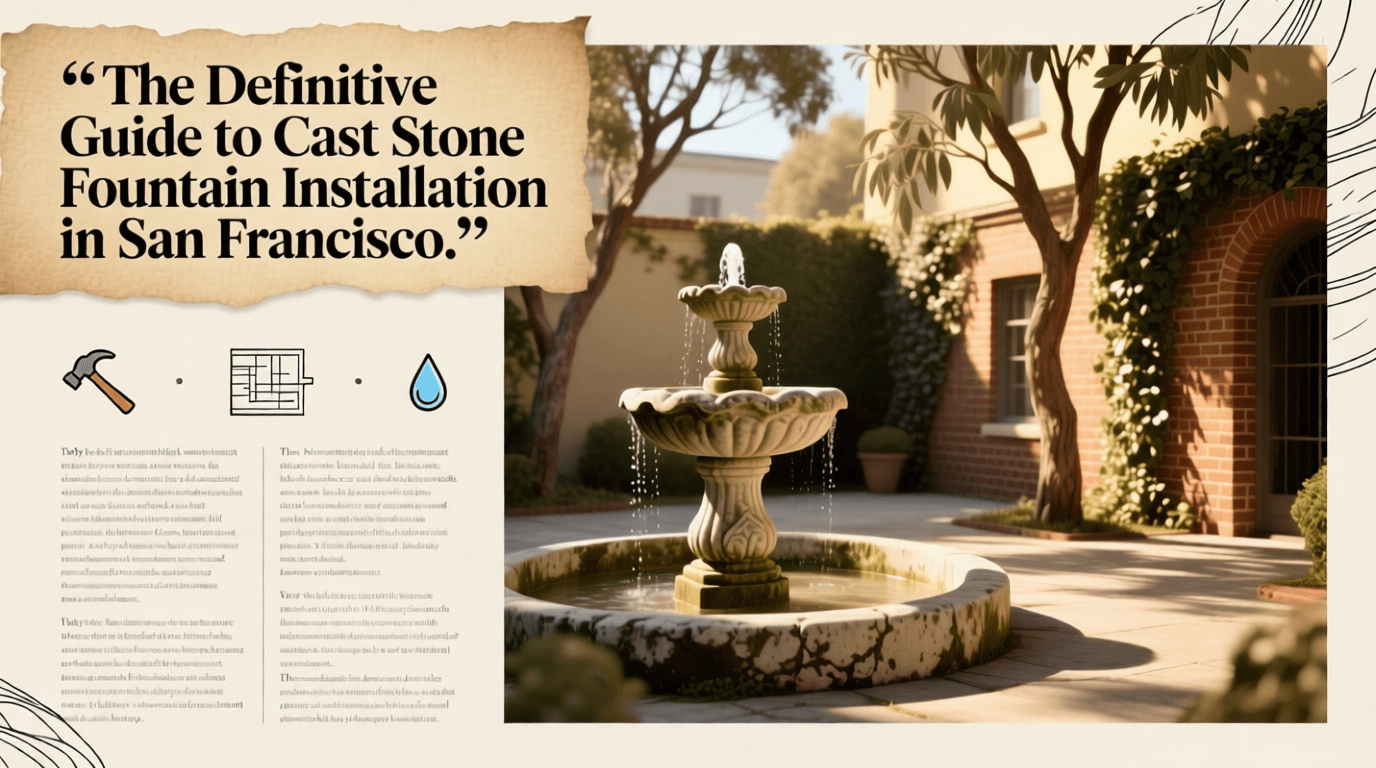
The enchanting ambiance of San Francisco, with its iconic fog, vibrant neighborhoods, and unique microclimates, calls for outdoor sanctuaries that provide a personal retreat. At the heart of many such Bay Area oases is the timeless presence of a cast stone fountain.
More than mere decoration, a properly installed cast stone fountain becomes a focal point of serenity, masking urban noise with the gentle sound of flowing water and adding a tangible sense of permanence and artistry to your landscape.
This comprehensive guide explores the intricacies of selecting and, most importantly, successfully installing a cast stone fountain in the distinctive environment of San Francisco, ensuring your investment brings a lifetime of beauty and tranquility.
Understanding Cast Stone: Durability Meets Artistry for the Bay Area Climate
Cast stone is a premium architectural material composed of fine aggregates, Portland cement, and mineral oxides for coloration, meticulously crafted in molds to replicate the look of natural cut stone. Its popularity in San Francisco stems from its ideal balance of aesthetic appeal and practical resilience.
Unlike some natural stones that can be porous and susceptible to rapid weathering in damp, salty air, high-quality cast stone is engineered for durability. It possesses excellent compressive strength and, when properly sealed, demonstrates strong resistance to the moisture-laden fog and occasional frost that can affect parts of the city. Furthermore, cast stone offers unparalleled design flexibility.
From classic tiered Renaissance designs that complement Victorian architecture to sleek, modern basins that echo the lines of contemporary Marina homes, cast stone can be molded into virtually any form, allowing for perfect harmony with San Francisco’s diverse architectural tapestry.
Critical Pre-Installation Considerations for San Francisco Properties
Before the first shovel meets soil, a series of strategic decisions must be made to ensure your fountain installation is seamless and sustainable. The foremost consideration is location selection. Analyze your garden’s exposure to wind, which can distort water flow and cause excessive splash.
Consider proximity to trees, as falling leaves from San Francisco’s many Monterey pines or eucalyptus can clog pumps and filters. The chosen site must also afford a pleasing sightline from key indoor and outdoor living areas, transforming the fountain into a living painting viewed from your home.
Equally vital is utility access. A cast stone fountain requires a dedicated electrical circuit for its recirculating pump, necessitating the involvement of a licensed electrician to run a conduit with a GFCI (Ground Fault Circuit Interrupter) outlet to the site for safety.
Access to a water source for occasional refilling due to evaporation is also a practical necessity. Finally, engaging with a reputable supplier or installer familiar with San Francisco’s specific conditions is paramount. They can guide you on weight considerations—cast stone is substantial—and ensure the design aligns with local aesthetics and practical realities.
The Cast Stone Fountain Installation Process: A Step-by-Step Foundation for Permanence
A successful installation is the bedrock of your fountain’s longevity and performance. The process begins with site preparation and base construction. This often involves excavating a stable foundation and pouring a reinforced concrete pad that is perfectly level. This base must support the immense weight of the fountain, which can easily exceed several hundred pounds, preventing any settling or cracking over time.
Next is the assembling of the fountain structure. Cast stone fountains are typically shipped in sections. These pieces are carefully stacked and bonded using a high-strength, waterproof masonry adhesive. Every joint must be meticulously aligned and sealed to prevent water leakage, which can erode the base and damage the stone.
The plumbing and electrical integration phase follows, where the submersible pump is placed in the reservoir, tubing is routed discreetly through the fountain’s structure, and all connections are made to the power source. The pump’s flow rate is adjusted to achieve the desired water effect, from a gentle babble to a robust cascade.
Finally, the area around the fountain is finished with hardscaping and landscaping. This includes securing pavers or gravel, integrating drainage to manage splash, and planting complementary, moisture-tolerant greenery to nestle the fountain naturally into its San Francisco garden setting.
Long-Term Maintenance and Care in the San Francisco Climate
To preserve the beauty and function of your cast stone fountain through the seasons, a consistent maintenance routine is essential. Regular cleaning is crucial; using a soft brush to remove algae, mineral deposits, and airborne debris without harsh chemicals will protect the stone’s surface.
The water should be treated with a fountain-safe algaecide, especially during sunnier periods in neighborhoods like Noe Valley or the Mission. Seasonal winterization is highly recommended, even with San Francisco’s mild winters. Frost can occur, and standing water in the lines can freeze and cause cracks.
This involves draining the fountain completely, removing and storing the pump indoors, and covering the fountain with a breathable, waterproof cover to protect it from winter rains and debris. Annual inspections of the pump, seals, and electrical components will ensure everything operates safely and efficiently, preventing minor issues from becoming major repairs.
FAQs
How much does a cast stone fountain installation typically cost in San Francisco?
Costs vary widely based on the fountain’s size, complexity, and site-specific challenges. A basic, pre-cast model with installation might start in the range of $3,000 – $5,000.
Is a permit required for fountain installation in San Francisco?
While the fountain itself may not always require a permit, the electrical work absolutely will. Running a new, buried conduit to the site must be performed by a licensed electrician and will likely require inspection.
Can a cast stone fountain be installed on a wooden deck?
It is generally not advisable due to the extreme weight and constant moisture. The concentrated load poses a structural risk, and persistent splash can lead to wood rot.
How do I manage water conservation with my fountain?
All quality fountains are recirculating, meaning they use the same water repeatedly, only requiring occasional topping off due to evaporation and splash. Selecting a pump with an appropriate flow rate and ensuring all seals are tight minimizes water loss.
What is the lead time for a custom cast stone fountain?
Patience is key for customization. From design approval to mold creation, casting, curing, and shipping, the process for a custom piece can take anywhere from 12 to 20 weeks or more. Planning well ahead of your desired installation date is essential.