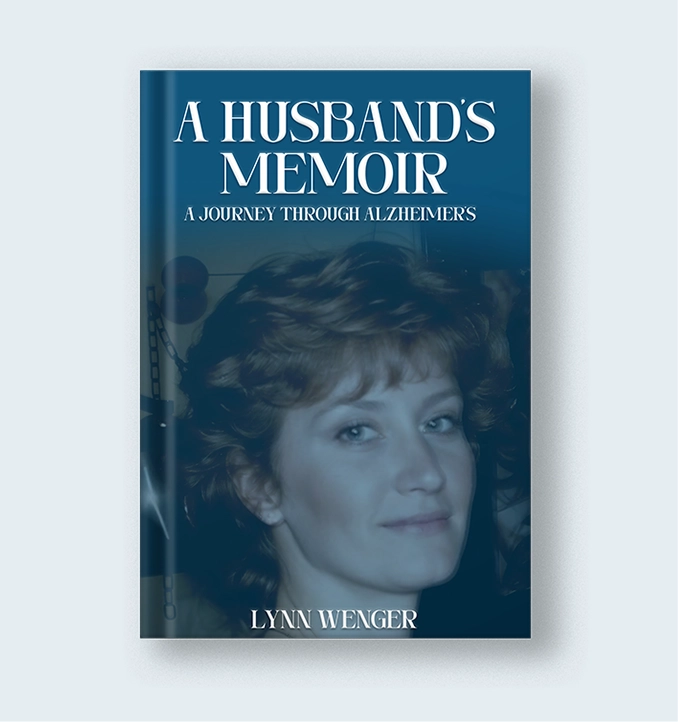
Love is easy when life is smooth. But what happens when memories fade, names disappear, and the person you cherish slowly slips into confusion? Would you stay? Would you fight? Would you remember enough for the both of you?
In A Husband’s Memoir, Lynn Wenger offers a deeply moving account of caring for a spouse with Alzheimer’s disease. It’s not just a story about illness. It’s about commitment. About showing up every day. About loving someone even when they can’t always remember your name.
This memoir feels less like a book and more like sitting at the kitchen table with someone who is gently telling you the hardest story of their life. It is honest. It is raw. And above all, it is human.
1. The Beginning of a Love Story
Before Alzheimer’s entered their lives, there was simply love.
Like many couples, their story started with laughter, shared dreams, and ordinary days that slowly built an extraordinary life. Lynn doesn’t paint a perfect fairy tale. Instead, he shares something more relatable — two imperfect people choosing each other again and again.
That’s what makes A Husband’s Memoir so powerful. It reminds us that love is not a grand gesture. It’s daily commitment. It’s washing dishes together. It’s inside jokes. It’s building decades of shared memories.
And that’s what makes losing those memories so heartbreaking.
2. When Small Forgettings Turn Serious
We all forget things. Where we left our keys. A name at a party. An appointment.
But what if forgetting becomes a pattern?
Lynn describes the early signs gently. A misplaced item. A repeated question. A growing confusion. At first, it’s easy to dismiss. Maybe it’s stress. Maybe it’s aging. We tell ourselves comforting stories because the alternative feels too frightening.
This section of A Husband’s Memoir captures that slow realization — the moment when concern turns into quiet fear.
It’s like watching a tiny crack appear in a window. At first, you ignore it. But over time, it spreads.
3. Facing the Diagnosis
No one is ever ready for the word “Alzheimer’s.”
When the diagnosis finally comes, it lands like a thunderclap. There’s shock. Denial. Anger. Grief — all at once.
Lynn doesn’t dramatize this moment. Instead, he describes it in a way that feels painfully real. Sitting in a doctor’s office. Hearing words that seem to echo in slow motion. Realizing life will never be the same.
A Husband’s Memoir shows us that a diagnosis is not just medical. It is emotional. It marks the beginning of a long goodbye.
4. The Emotional Earthquake
Imagine waking up one day and realizing your partner may slowly forget who you are.
That’s not just sadness. That’s an emotional earthquake.
Lynn speaks openly about fear — fear of the future, fear of loss, fear of watching someone he loves fade away. But he also writes about determination. He makes a choice: to stay present, no matter what comes.
This honesty makes the memoir relatable. Readers see their own fears reflected back at them.
5. Becoming a Full-Time Caregiver
Here’s the truth most people don’t talk about: caregiving changes everything.
Spouses become nurses. Partners become protectors. Life becomes structured around medications, appointments, and routines.
In A Husband’s Memoir, Lynn explains the daily realities of caregiving. The exhaustion. The patience required. The constant watchfulness.
Caregiving is like running a marathon without knowing where the finish line is. You pace yourself, but you never truly rest.
And yet, he continues.
Why? Because love demands action.
6. Love Redefined
When memory fades, what remains?
Lynn discovers that love shifts form. It becomes quieter but deeper. It is no longer built on shared stories but on shared presence.
Sometimes his wife remembers him clearly. Sometimes she doesn’t. But even in confusion, there are flashes of recognition — a smile, a squeeze of the hand.
In these moments, we see that love is more than memory. It’s emotional imprint. It’s something carved into the heart.
That’s one of the most beautiful lessons in A Husband’s Memoir.
7. The Loneliness No One Talks About
Caregiving can be isolating.
Friends don’t always understand. Social invitations slow down. Conversations become difficult.
Lynn writes about sitting alone after his wife falls asleep, processing the day in silence. He describes feeling both surrounded by responsibility and utterly alone.
It’s a kind of loneliness that doesn’t get much attention. But it’s real.
By sharing it, he gives other caregivers permission to say, “Me too.”
8. Moments of Light in the Darkness
This memoir is not only about sadness.
There are surprising moments of joy. A shared laugh over something unexpected. A peaceful afternoon walk. A memory briefly restored.
These small moments shine like candles in a dark room.
Lynn reminds us that even in decline, life still offers beauty. And sometimes, those fragile moments feel even more precious because they are rare.
9. The Role of Family and Community
No one can walk this journey alone.
In A Husband’s Memoir, we see the importance of family support. Children stepping in. Friends offering help. Community members providing encouragement.
Caregiving is heavy. But shared, it becomes bearable.
This section highlights a simple truth: love expands. It pulls others in. It creates a circle of care.
10. Faith, Hope, and Inner Strength
Where does someone find the strength to continue?
For Lynn, part of that strength comes from faith. Not necessarily in grand miracles, but in daily resilience.
Hope doesn’t mean believing things will return to normal. It means believing you can face whatever comes.
And sometimes, that’s enough.
11. The Power of Memory and Storytelling
There’s something beautifully ironic about a memoir centered on memory loss.
By writing A Husband’s Memoir, Lynn preserves the very thing Alzheimer’s threatens to erase — their shared story.
Writing becomes an act of resistance.
It says: “Even if memory fades in the mind, it will live on in words.”
Storytelling becomes healing. Not just for him, but for readers too.
12. What Makes A Husband’s Memoir So Powerful
Plenty of books discuss Alzheimer’s. But this one feels different.
Why?
Because it doesn’t lecture. It shares.
The tone is personal and conversational. It feels like someone opening their heart, not presenting a case study.
Readers connect not because of medical facts, but because of emotional truth.
13. Lessons for Every Reader
You don’t need to be a caregiver to learn from this memoir.
Here are a few powerful lessons:
- Love is a daily choice.
- Patience is an act of compassion.
- Presence matters more than perfection.
- Even in loss, there is dignity.
These lessons apply to all relationships — not just those touched by Alzheimer’s.
14. Why This Story Matters Today
Alzheimer’s affects millions of families worldwide. As populations age, more spouses will face similar journeys.
Books like A Husband’s Memoir prepare us emotionally. They encourage empathy. They remind us to value the people we love — now.
Because none of us knows what tomorrow holds.
Isn’t that reason enough to cherish today?
Conclusion
At its core, A Husband’s Memoir is not a story about disease. It is a story about devotion.
Through simple, heartfelt storytelling, Lynn Wenger invites us into his life — into the quiet struggles and the enduring love that defines his marriage. He shows us that while Alzheimer’s may steal memories, it cannot erase commitment.
This memoir leaves readers with something rare: a deeper appreciation for the fragile beauty of love.
And maybe, just maybe, it encourages us to hold our loved ones a little closer tonight.
FAQs
1. What is A Husband’s Memoir about?
It is a heartfelt account of a husband caring for his wife after she is diagnosed with Alzheimer’s disease. The memoir focuses on love, resilience, and the emotional realities of caregiving.
2. Who is Lynn Wenger?
Lynn Wenger is the author of this touching Alzheimer’s memoir, sharing his personal journey as a devoted spouse and caregiver.
3. Is A Husband’s Memoir only for people affected by Alzheimer’s?
No. While it centers on Alzheimer’s, its themes of love, commitment, and resilience resonate with anyone who values deep relationships.
4. What makes this memoir different from other books on Alzheimer’s?
It stands out because of its conversational tone and emotional honesty. Instead of focusing on medical details, it highlights the human side of caregiving.
5. What can readers learn from A Husband’s Memoir?
Readers learn about patience, compassion, strength, and the true meaning of unconditional love — lessons that extend far beyond the pages of the book.