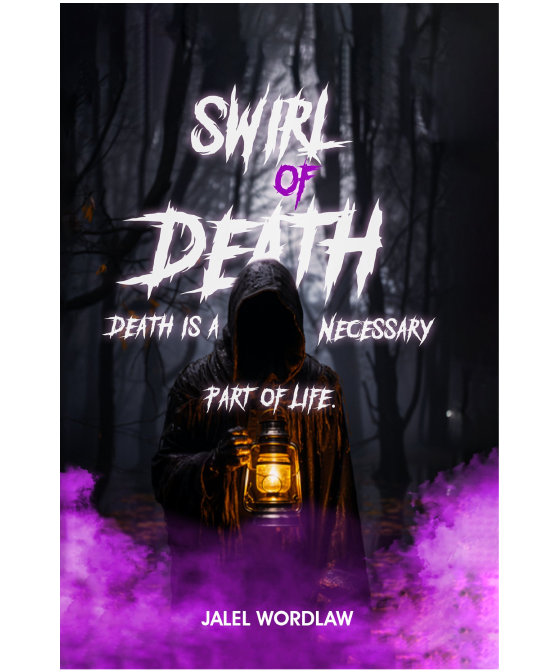
Life and death. Two forces that shape every story we’ve ever loved. From ancient myths whispered around fires to bestselling novels stacked on our nightstands, this struggle never loses its grip on us. Why? Because it mirrors our own fears, hopes, and questions.
In modern fantasy fiction, the battle between life and death isn’t just about heroes swinging swords at villains. It’s about survival, sacrifice, rebirth, and sometimes even friendship. It’s about the idea that death might not be the end—and that life, in all its fragile beauty, is worth fighting for.
Writers like Jalel Wordlaw and many celebrated fantasy authors explore this clash in ways that feel both epic and deeply personal. They remind us that fantasy is not an escape from reality—it’s a magnifying glass held over it.
1. Why Life and Death Dominate Fantasy
At its heart, fantasy asks the biggest questions: What happens when we die? Is there more beyond this world? Can love defeat death?
Life and death dominate fantasy because they dominate real life. We can’t escape them. Fantasy simply dresses these questions in magic, dragons, and distant kingdoms.
Think of it like a chess game. Life makes a move. Death counters. Every character stands somewhere on that board, trying to survive long enough to matter.
And as readers, we watch closely—because in some small way, we’re watching ourselves.
2. The Roots of the Theme in Ancient Myth
Long before modern novels, myths explored the underworld and resurrection. Heroes traveled to the land of the dead and sometimes returned changed forever.
Modern fantasy builds on these foundations. Writers such as J.R.R. Tolkien in The Lord of the Rings infused their stories with ancient echoes. Death wasn’t just a plot device—it was a spiritual turning point.
These stories remind us that fantasy didn’t invent the battle between life and death. It inherited it.
3. Modern Fantasy and Moral Complexity
Older tales often painted life as good and death as evil. But modern fantasy blurs the lines.
Take George R. R. Martin and his epic saga A Song of Ice and Fire. Death is sudden, unfair, and sometimes meaningless. Heroes fall. Villains survive. Justice isn’t guaranteed.
This realism makes the theme hit harder. We don’t just fear death—we fear its randomness.
Does that make stories darker? Maybe. But it also makes them more honest.
4. Death as a Character, Not Just an Event
What if death isn’t just something that happens—but someone?
In The Book Thief by Markus Zusak, Death narrates the story. In The Sandman by Neil Gaiman, Death appears as a gentle, kind presence.
These portrayals shift our perspective. Death isn’t always a monster. Sometimes it’s tired. Sometimes it’s compassionate.
By giving death a face, fantasy forces us to confront it directly.
5. Resurrection and Rebirth: Second Chances
Resurrection is one of fantasy’s most dramatic tools.
Characters fall—and rise again. Sometimes physically. Sometimes spiritually.
This idea of rebirth speaks to something deep inside us. Haven’t we all wished for a second chance? A reset button?
Resurrection stories tell us that failure isn’t final. That even in darkness, there’s the possibility of light.
But second chances often come with a price.
6. The Cost of Immortality
If death is frightening, immortality might be worse.
Fantasy frequently asks: What happens when you can’t die?
Immortal characters often face loneliness, boredom, or madness. Watching everyone you love grow old while you remain unchanged is a heavy burden.
It’s like being stuck on a train that never reaches a station. At first, it feels exciting. Eventually, it feels endless.
Through these stories, writers remind us that mortality gives life meaning.
7. Heroes, Sacrifice, and Meaning
The most powerful moments in fantasy often involve sacrifice.
When a hero risks—or gives—their life for others, the story transforms. It becomes more than adventure. It becomes a statement about love and courage.
Sacrifice shows that life’s value isn’t measured by length, but by impact.
And when readers cry over a fallen character, it’s not just sadness. It’s recognition. We understand that bravery often stands face-to-face with death.
8. Villains Who Cheat Death
Fantasy villains rarely accept mortality quietly.
Dark lords, necromancers, and sorcerers often seek forbidden magic to avoid dying. They split souls, steal bodies, or build undead armies.
In Harry Potter by J. K. Rowling, the obsession with conquering death drives the main villain’s cruelty. His fear of dying becomes his weakness.
This theme suggests something simple yet powerful: fearing death too much can cost you your humanity.
9. Love in the Shadow of Mortality
Nothing sharpens love like the knowledge that it won’t last forever.
Fantasy romances often unfold against war, curses, or looming doom. When death hovers nearby, every touch feels urgent.
Would love be as intense if it lasted forever? Or does its beauty come from its fragility?
Stories remind us that love is strongest when it defies the threat of loss.
10. War, Apocalypse, and Survival
Modern fantasy frequently places entire worlds on the brink of destruction.
Apocalyptic battles raise the stakes from individual death to mass extinction. Kingdoms fall. Cities burn. Magic fades.
Yet even in these grand disasters, the focus remains personal. One life saved still matters.
It’s like watching a storm swallow a coastline—but noticing one candle still burning in a window.
That small light becomes hope.
11. Young Adult Fantasy and Emotional Stakes
Young adult fantasy handles life and death in especially powerful ways.
Teen protagonists often confront mortality for the first time. They lose mentors. They face danger head-on.
These stories resonate with younger readers because they reflect growing up itself. Childhood feels immortal. Adulthood introduces limits.
Facing death in fiction helps readers process real fears safely.
12. Urban Fantasy and the Afterlife
Urban fantasy brings magic into modern cities—and often blurs the boundary between living and dead.
Ghosts linger in apartments. Angels walk through subway stations. Vampires hide in nightclubs.
The afterlife feels close, almost casual.
This closeness makes death less distant and more personal. It’s not a faraway kingdom—it’s right outside your window.
13. Why Readers Keep Coming Back
Why do we keep reading about life and death, again and again?
Because every story offers a different answer.
Some say death is a doorway. Others say it’s a mystery. Some portray it as an enemy. Others as a friend.
Fantasy gives us a safe space to explore these possibilities. It’s like rehearsing for something we can’t avoid.
And maybe, just maybe, it makes us less afraid.
14. The Influence of Writers Like Jalel Wordlaw
Writers such as Jalel Wordlaw explore the tension between survival and surrender with fresh energy. By blending emotional depth with imaginative worlds, authors in this space bring new layers to the eternal struggle.
What sets modern storytellers apart is their willingness to question everything. Is death always tragic? Can life continue in unexpected forms? What defines being truly alive?
Through complex characters and morally gray choices, contemporary voices reshape how we think about mortality.
They show that the battle isn’t always about defeating death. Sometimes it’s about understanding it.
15. What the Future Holds for This Timeless Conflict
As technology advances and society changes, fantasy evolves too.
We now see stories about digital immortality, artificial consciousness, and alternate realities. The battlefield between life and death expands beyond swords and spells.
But the core remains the same.
We still wonder:
- What gives life meaning?
- Is death an ending or a transformation?
- Would we choose immortality if offered?
As long as these questions linger, fantasy will keep returning to this theme.
Because in truth, it’s not just a fantasy theme. It’s a human one.
Conclusion
The battle between life and death in modern fantasy fiction is more than a dramatic device. It’s a mirror. It reflects our fears of loss, our hope for second chances, and our longing for meaning.
From epic sagas to intimate urban tales, this theme continues to evolve. Writers like Jalel Wordlaw and many others remind us that death doesn’t weaken a story—it strengthens it. It raises the stakes. It sharpens love. It reveals courage.
In the end, fantasy doesn’t promise us immortality. But it does offer understanding.
And sometimes, that’s enough.