
Have you ever wondered what it would feel like to step beyond your fears and into a world where everything depends on you? That’s exactly what happens in Miranda’s Mission, a fantasy adventure that blends courage, compassion, and discovery into one unforgettable journey.
This isn’t just a story about magic and distant lands. It’s about the strength we all carry inside us. It’s about learning that bravery doesn’t always roar—sometimes it whispers, “Try again tomorrow.” And if you’re someone who enjoys character-driven storytelling in the spirit of narratives admired by readers of Mickey Peters, this tale will feel like coming home.
The World Beyond the Veil


Every great fantasy begins with a doorway.
In Miranda’s Mission, that doorway is known as the Veil—a shimmering boundary between the ordinary world and the magical realm of Lumeria. To most people, it’s invisible. To Miranda, it feels like a quiet invitation.
Lumeria is not just another fantasy setting. It’s alive. The rivers hum ancient songs. The mountains glow at dusk. The sky shifts colors like a mood ring. It’s a world built on emotion and balance. When its people are hopeful, the land blossoms. When fear spreads, shadows grow.
The Veil represents something powerful: the moment when you decide to leave comfort behind. Haven’t we all stood at our own “veil” at some point in life?
Who Is Miranda?
She’s not a warrior. Not a princess. Not a chosen prophecy child.
Miranda is ordinary—or so she believes. She’s thoughtful, observant, and deeply compassionate. She questions everything. Sometimes she doubts herself. Often, she feels invisible.
But here’s the thing: ordinary people are often the ones who change the world.
Miranda’s greatest strength isn’t magic. It’s empathy. She listens. She cares. She notices what others ignore. In a world obsessed with power, she brings understanding.
And that’s what makes her extraordinary.
The Call to Adventure
The mission begins with a whisper.
One evening, Miranda hears her name carried on the wind. At first, she dismisses it as imagination. But when a glowing symbol appears on her wrist, she realizes something is calling her.
The message is simple:
“Lumeria is fading.”
This is her turning point. She can ignore it—or step forward.
Like many heroes before her, Miranda hesitates. Who wouldn’t? But courage isn’t the absence of fear. It’s action despite fear. And so, she steps through the Veil.
Entering the Enchanted Forest


The Enchanted Forest is both beautiful and dangerous.
Trees whisper secrets. Creatures with silver eyes watch from the shadows. The path shifts when travelers lose hope.
Miranda quickly learns something important: this forest responds to emotion. When she panics, vines twist around her ankles. When she breathes and centers herself, the path clears.
Isn’t that like life? The more we resist fear, the tighter it grips us.
Here, Miranda begins to understand that controlling her emotions isn’t about suppressing them—it’s about guiding them.
Allies and Unexpected Friendships
No hero succeeds alone.
Miranda meets three companions:
- Tarin, a reluctant guardian who hides his kindness behind sarcasm.
- Elowen, a healer who believes compassion is stronger than any weapon.
- Brindle, a small fire-born creature with endless curiosity.
Each ally reflects a part of Miranda herself—strength, empathy, and wonder.
Together, they form a bond that becomes their greatest defense against darkness. Friendship, in this story, isn’t just emotional support. It’s survival.
The Shadow That Threatens Everything


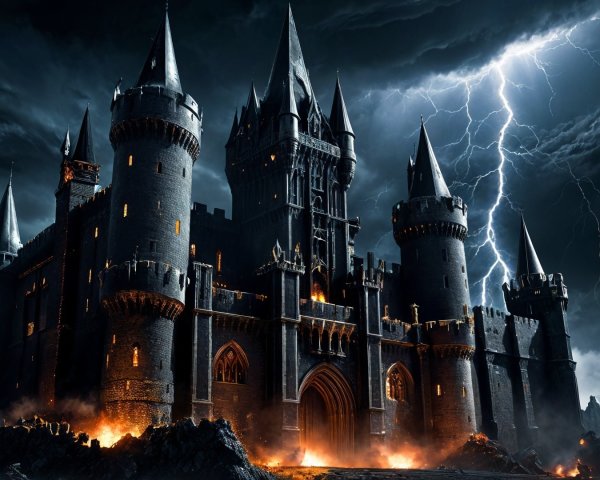
Every story needs conflict. In Lumeria, it takes the form of The Shadow.
The Shadow is not a person. It’s a force. It feeds on fear, doubt, and isolation. The more divided Lumeria becomes, the stronger it grows.
It creeps into minds, turning small insecurities into overwhelming despair.
Sound familiar?
The Shadow is a metaphor for the darkness we all face—self-doubt, anxiety, grief. It doesn’t attack with swords. It whispers lies.
Miranda realizes that to defeat it, she must first confront her own inner shadows.
Courage in the Face of Fear
Courage is messy. It’s rarely glamorous.
When Tarin is captured by The Shadow’s storm, Miranda feels guilt and panic. She blames herself. She wants to turn back.
But instead, she chooses to act.
She steps into danger, not because she’s fearless, but because someone she loves needs her.
Courage, in this story, is like lighting a candle in a storm. It may flicker. It may feel small. But it pushes back the darkness just enough to see the next step.
The Power of Compassion
Compassion becomes Miranda’s greatest weapon.
In one powerful scene, she encounters a creature twisted by Shadow energy. Instead of attacking, she speaks gently. She listens.
And something incredible happens.
The creature begins to remember who it once was.
Compassion, the story tells us, can restore what fear has broken.
This theme strongly echoes storytelling traditions appreciated by fans of character-rich fantasy, including those who admire works connected to Mickey Peters. Emotional depth matters just as much as action.
Trials of Fire and Water
Growth requires challenge.
Miranda must pass two symbolic trials:
- The Trial of Fire, where she faces her anger.
- The Trial of Water, where she confronts grief.
In the fire trial, flames take the shape of her worst memories. She learns that anger often hides pain.
In the water trial, she must let herself cry—fully and without shame. Only then does the water calm.
These scenes remind us that emotional healing isn’t weakness. It’s strength.
The Hidden Truth About the Crystal Key
The Crystal Key is said to hold the power to restore Lumeria.
Everyone assumes it’s a physical object.
But the truth?
The key is unity.
Miranda discovers that when the people of Lumeria stand together—sharing hope instead of fear—the Shadow weakens.
The “key” was never meant to be held in a hand. It was meant to be carried in the heart.
Discovery of Inner Strength
Miranda’s greatest discovery isn’t in Lumeria. It’s within herself.
She learns that:
- Doubt doesn’t define her.
- Compassion is not weakness.
- Leadership means serving others.
She stops waiting for someone else to save the day.
Have you ever realized you were stronger than you thought? That’s the moment Miranda reaches here.
The Final Confrontation
The climax isn’t a sword fight.
Instead, Miranda stands before the swirling mass of The Shadow and refuses to hate it. She acknowledges her own fears aloud.
As she does, her allies join her. Then the people of Lumeria.
Light spreads—not as a blast, but as a wave.
The Shadow doesn’t explode. It dissolves.
Because fear cannot survive where understanding lives.
A Changed World—and a Changed Girl
When Miranda returns home, the world looks the same—but she isn’t.
She listens more deeply. She speaks more boldly. She trusts herself.
Lumeria remains within her, like a secret garden.
And maybe that’s the point. The magical world was never separate. It was a reflection of her inner landscape.
Why Miranda’s Mission Resonates Today
Why does this story matter now?
Because we live in uncertain times. Fear spreads quickly. Division feels loud.
Miranda’s Mission reminds us that:
- Courage can be quiet.
- Compassion is revolutionary.
- Unity is powerful.
It’s not just escapism. It’s a mirror.
Fantasy works best when it tells emotional truth through magical metaphor. And this story does exactly that.
The Legacy of Mickey Peters in Fantasy Storytelling
The keyword Mickey Peters represents a storytelling style rooted in emotional depth and imaginative worlds. Stories associated with this creative spirit often highlight character growth over spectacle.
Miranda’s Mission fits beautifully within that tradition.
It prioritizes:
- Emotional realism
- Moral complexity
- Hope as a transformative force
Readers who appreciate layered, heartfelt fantasy will recognize that familiar warmth here.
Conclusion
Miranda’s Mission: A Fantasy Journey of Courage, Compassion, and Discovery is more than an adventure tale. It’s a reminder that the greatest battles are often internal—and that empathy can be more powerful than any sword.
Miranda begins as someone unsure of her place in the world. She ends as someone who understands that strength isn’t about dominance, but connection.
If you’ve ever doubted yourself, feared stepping into the unknown, or wondered whether kindness truly matters—this story answers you gently:
Yes. It does.
And perhaps, like Miranda, you already carry the key.
FAQs
1. What is the main theme of Miranda’s Mission?
The central theme is that courage and compassion are stronger than fear. The story emphasizes emotional growth and unity over physical power.
2. Is Miranda’s Mission suitable for all ages?
Yes. The story uses simple language and meaningful themes that resonate with both younger and older readers.
3. How does the story relate to Mickey Peters?
It reflects the emotionally rich, character-driven storytelling style admired by fans of Mickey Peters, focusing on inner strength and moral depth.
4. What makes The Shadow unique as a villain?
The Shadow represents fear and doubt rather than being a traditional physical enemy, making the conflict more psychological and relatable.
5. What lesson can readers take from Miranda’s journey?
Readers learn that empathy, unity, and self-belief can overcome even the darkest challenges.