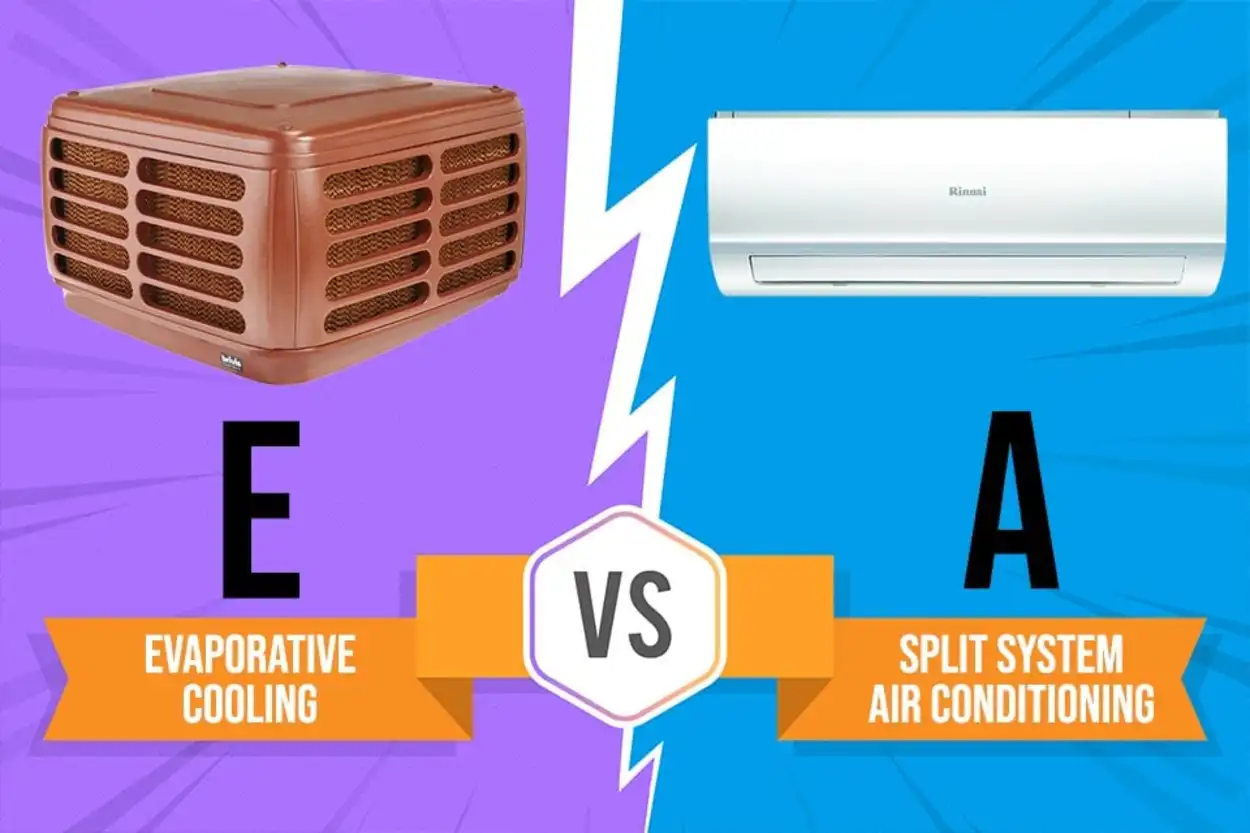
Comparing Evaporative Coolers and Air Conditioners Side by Side – Choosing the right cooling system is a practical decision that affects comfort, operating costs, and energy use. Two of the most common options are evaporative coolers and air conditioners. While both aim to lower indoor temperatures, they work in very different ways and suit different environments.
This article compares evaporative coolers and air conditioners side by side, looking at how they operate, where they perform best, and what buyers should consider before investing.
How Each System Works
Evaporative Coolers
Evaporative coolers, often called swamp coolers, rely on a natural process. Warm outside air is drawn through water-saturated pads. As the water evaporates, it absorbs heat from the air, which is then circulated indoors as cooler, fresher air.
This process works best in dry climates where evaporation happens quickly. Because evaporative coolers bring in outside air, windows or vents need to remain partially open to allow airflow.
Air Conditioners
An air conditioner uses a closed-loop refrigeration cycle. It removes heat and moisture from indoor air using refrigerant, a compressor, and condenser coils. The cooled air is recirculated inside, while the heat is expelled outdoors.
Unlike evaporative systems, an Air Conditioner does not rely on outside humidity levels. This makes it effective in both dry and humid environments.
Cooling Performance and Climate Suitability
Evaporative coolers are highly effective in hot, arid regions. In places with low humidity, they can reduce indoor temperatures by 10 to 15 degrees Celsius while maintaining a fresh air feel. However, their performance drops significantly in humid conditions, where evaporation slows and cooling becomes less noticeable.
Air conditioners provide consistent and predictable cooling regardless of climate. They are especially effective in humid areas, as they remove moisture from the air while cooling. This makes them the preferred option in coastal regions, tropical climates, and densely populated urban areas.
Energy Consumption and Operating Costs
One of the main advantages of evaporative coolers is energy efficiency. They use significantly less electricity than an air conditioner because they do not rely on compressors or refrigerants. Operating costs are typically lower, making them appealing for large spaces or long operating hours.
Air conditioners consume more power, particularly older or poorly maintained systems. However, modern inverter-based air conditioners have improved efficiency and offer better temperature control with reduced energy waste. While initial energy use is higher, many users accept the cost in exchange for reliable cooling.
Installation and Maintenance Requirements
Evaporative coolers are generally simpler to install. Many models require minimal ducting, and portable units can be deployed quickly. Maintenance includes cleaning pads, checking water levels, and seasonal servicing to prevent mineral buildup.
Air conditioners involve more complex installation. Split systems require indoor and outdoor units, refrigerant lines, and professional setup. Maintenance includes filter cleaning, refrigerant checks, and periodic servicing by trained technicians. While more involved, this maintenance ensures long-term performance and durability.
Air Quality and Indoor Comfort
Evaporative coolers continuously draw in fresh air, which can improve ventilation and reduce indoor pollutants. They also add moisture to dry air, which can be beneficial in arid environments where dry air causes discomfort.
Air conditioners recirculate indoor air and typically rely on filters to maintain air quality. High-quality filters can remove dust, allergens, and fine particles. However, without proper maintenance, filters can clog and reduce performance. Air conditioners also lower humidity, which can improve comfort but may feel dry for some users.
Noise Levels and User Experience
Evaporative coolers tend to produce a steady airflow sound, often perceived as background noise. The sound level depends on fan speed and unit size.
Air conditioners vary widely in noise output. Modern systems are designed to operate quietly, especially inverter models. Outdoor compressors handle most of the noise, improving indoor comfort.
Cost Considerations and Product Value
Upfront costs for evaporative coolers are usually lower than for air conditioners. This makes them attractive for budget-conscious buyers or large industrial spaces where full air conditioning would be expensive.
Air conditioners require a higher initial investment but deliver precise temperature control and year-round usability in all climates. For many residential and commercial buyers, the long-term value lies in consistent performance and comfort.
Making the Right Choice
The decision between an evaporative cooler and an air conditioner depends on climate, budget, and usage needs. Evaporative coolers offer an energy-efficient, environmentally friendly solution for dry regions. Air conditioners provide dependable cooling and humidity control across diverse global environments.
Understanding these differences helps buyers select the system that best aligns with their operational requirements and comfort expectations.
Article about ” Comparing Evaporative Coolers and Air Conditioners Side by Side ” post by ac 1/2 pk – https://acjakarta.com