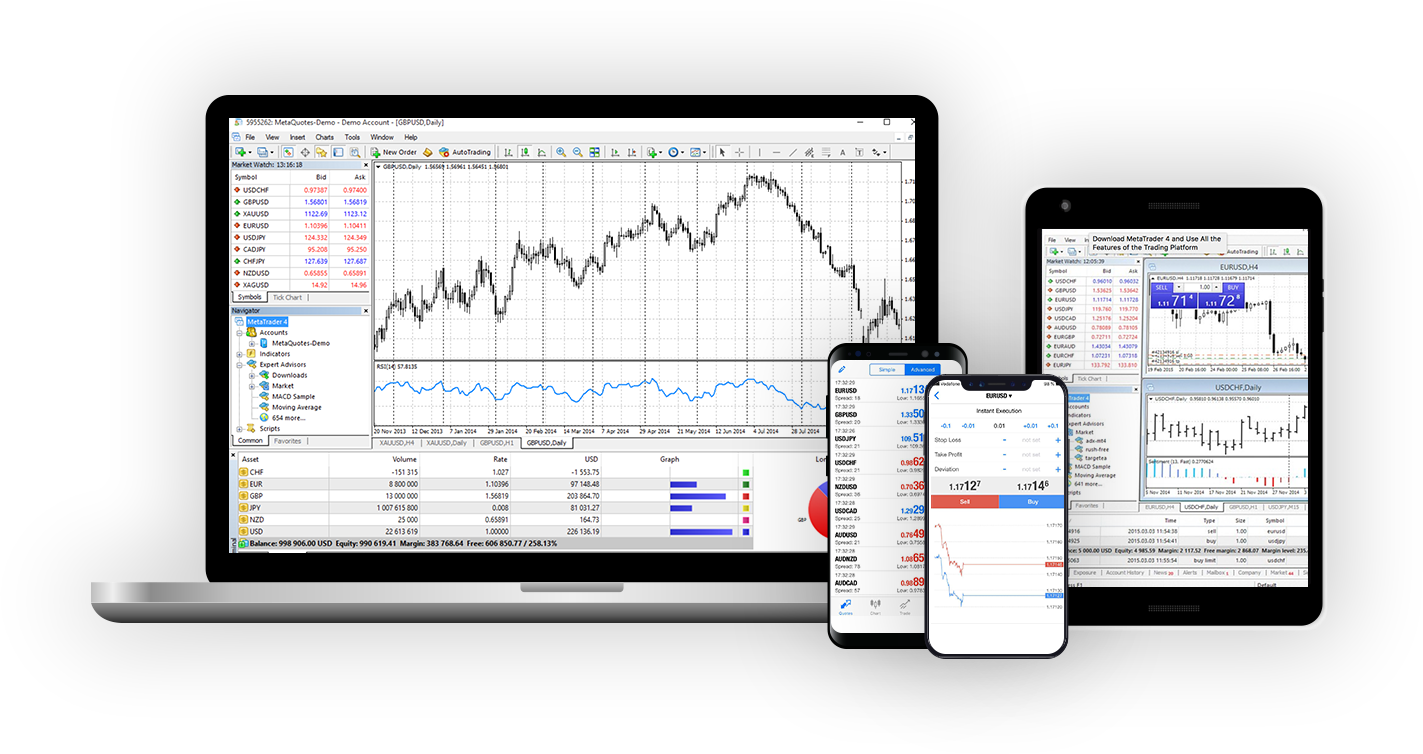
Planning to start forex trading in 2026 can feel overwhelming. Traders today have access to an unprecedented range of platforms, tools, and technologies. Features such as cloud-based charting, mobile trading apps, social trading networks, and automated strategies are no longer innovations — they are industry standards.
With so many options available, one principle remains unchanged: the trading platform you choose still matters. Your platform is the primary interface between you and the market, and its reliability, usability, and performance directly affect how efficiently you analyse price action, manage risk, and execute trades.
While newer platforms such as MetaTrader 5, cTrader, TradingView integrations, and proprietary broker solutions continue to gain market share, MetaTrader 4 (MT4) remains widely used in 2026, particularly among forex-focused traders. Rather than competing on novelty, MT4 has established itself as a stable, familiar, and highly efficient trading environment that continues to meet the practical needs of many market participants.
This article explains what MetaTrader 4 is, why it remains relevant in 2026, and the key features that continue to attract traders today.
What Is MetaTrader 4 and Why Do Traders Still Use It?
MetaTrader 4 is best described as the battle-tested veteran of the forex trading world. Originally designed for forex and CFD trading, it has remained in active use through decades of technological change for one simple reason: it works reliably and efficiently.
MT4 allows traders to analyse price movements, monitor markets, manage orders, and automate strategies from a single interface without demanding high system resources or complex configuration. Its design prioritises functionality over visual flair, making it especially appealing to traders who value execution precision and analytical depth.
Beyond manual trading, MT4 remains one of the most established platforms for algorithmic trading. Its long-standing support for Expert Advisors (EAs) has resulted in a vast global ecosystem of custom indicators, scripts, and automated strategies. Many of these tools have been refined over years of live market use, giving traders access to a depth of resources that newer platforms are still developing.
For traders who approach forex as a disciplined, professional activity rather than a casual pursuit, MT4 continues to offer a dependable and efficient trading environment.
1. Customisable and User-Friendly Interface
One of MetaTrader 4’s enduring strengths is its highly customisable interface. Traders can adjust chart layouts, colour schemes, timeframes, and indicator settings to align with their trading strategies and preferred market views.
Charts can be arranged across multiple windows, saved as templates, and reused across different instruments. This allows traders to maintain consistent analytical setups, whether they trade a single currency pair or monitor multiple markets simultaneously.
Despite its age, MT4 remains intuitive to navigate. Beginners can quickly learn the basics, while experienced traders benefit from a streamlined interface that avoids unnecessary complexity and distractions.
2. One-Click Trading Functionality
Speed remains critical in forex trading, particularly during periods of high volatility. MetaTrader 4’s one-click trading feature continues to play an important role in 2026.
Traders can place market orders directly from the chart with a single click, reducing execution time when conditions change rapidly. Order parameters such as stop-losses, take-profits, pending orders, and trailing stops can be adjusted quickly without navigating multiple menus.
This functionality is especially valuable for:
- Short-term and intraday traders
- News-event traders
- Traders managing multiple open positions at once
3. Profiles and Chart Templates
MetaTrader 4 allows traders to create multiple profiles and chart templates, making it easy to switch between strategies, instruments, or trading sessions.
For traders who analyse several currency pairs or apply different approaches (such as scalping, swing trading, or position trading), profiles help maintain organisation and efficiency. Entire workspaces can be saved and recalled instantly, eliminating the need to rebuild charts or indicator setups.
This feature is particularly useful for traders who value structured, repeatable workflows.
4. Built-In and Custom Technical Indicators
MT4 includes a comprehensive set of built-in technical indicators covering:
- Trend analysis
- Momentum and oscillators
- Volatility measurement
- Volume-based tools
In addition to these default indicators, traders can install thousands of custom indicators developed using MQL4, MetaTrader 4’s native programming language. While MT4 does not use the newer MQL5 environment, its long-established developer community continues to support a wide range of tools that remain actively used in 2026.
This depth of customisation makes MT4 particularly appealing to traders who rely on specific legacy indicators, proprietary systems, or personalised analytical frameworks.
5. Expert Advisors (Automated Trading)
Automated trading remains one of the strongest reasons traders continue to use MetaTrader 4 in 2026.
MT4 supports Expert Advisors (EAs)—automated trading programs written in MQL4 that can analyse market conditions, generate signals, and execute trades automatically based on predefined rules.
Many traders continue to run:
- Long-standing EA strategies
- Custom-built trading robots
- Semi-automated scripts for trade execution and management
MT4’s lightweight architecture makes it especially well-suited for VPS hosting, allowing automated strategies to run continuously with minimal system resources. For traders with established automation workflows, MT4 remains a practical, stable, and cost-effective solution.
6. Security and Platform Stability
In 2026, basic account protection is no longer sufficient. Given the size and liquidity of the forex market, security and platform stability are essential considerations.
MetaTrader 4 continues to support encrypted communication between the trading terminal and broker servers, typically using 256-bit AES encryption, which meets modern financial security standards. However, overall account security largely depends on the broker’s infrastructure and risk controls.
In practice, MT4 is often paired with:
- Multi-factor authentication (MFA) through broker portals
- Secure, encrypted client areas for account management
- VPS and server-level protections for automated trading
MT4 is also widely regarded for its platform stability. Its long development history has resulted in a predictable and robust environment, which many traders prefer over platforms that undergo frequent interface or system changes.
7. Cross-Device Compatibility
MetaTrader 4 remains available across multiple devices and operating systems:
- Desktop (Windows and broker-supported macOS solutions)
- WebTrader via browser access
- Mobile apps for iOS and Android
While the desktop version offers the most complete functionality, web and mobile versions allow traders to monitor markets, manage positions, and execute trades while away from their primary workstation. In 2026, MT4 mobile apps are typically used as companion tools rather than full replacements for desktop trading.
8. Lightweight and Resource-Efficient Design
Compared to many modern trading platforms, MetaTrader 4 remains compact and resource-efficient. It runs smoothly on modest hardware and performs reliably even when multiple charts or automated strategies are active.
This lightweight design remains an advantage for:
- Traders using VPS environments
- Traders with older or low-power hardware
- Those who prioritise execution stability over advanced visual features
Is MetaTrader 4 Still Worth Using in 2026?
The short answer is YES. While it’s no longer the most advanced trading platform available, MetaTrader 4 continues to serve a clear and well-defined purpose in 2026.
MetaTrader 4 remains a strong choice for forex-focused traders, particularly those who rely on established Expert Advisors and proven trading systems. It continues to appeal to traders who value platform stability, simplicity, and familiarity, as well as those who prefer a lightweight and efficient trading environment over feature-heavy alternatives.
Rather than becoming obsolete, MetaTrader 4 has settled into its role as a specialist platform — one that continues to meet the needs of a significant segment of the global forex trading community.
Author Bio: Carmina Natividad is one of the resident writers for FP Markets, a global Foreign Exchange (Forex) and Contracts for Differences (CFD) broker in Australia. Writing informative content about trading, investing, and personal finance is her cup of tea.